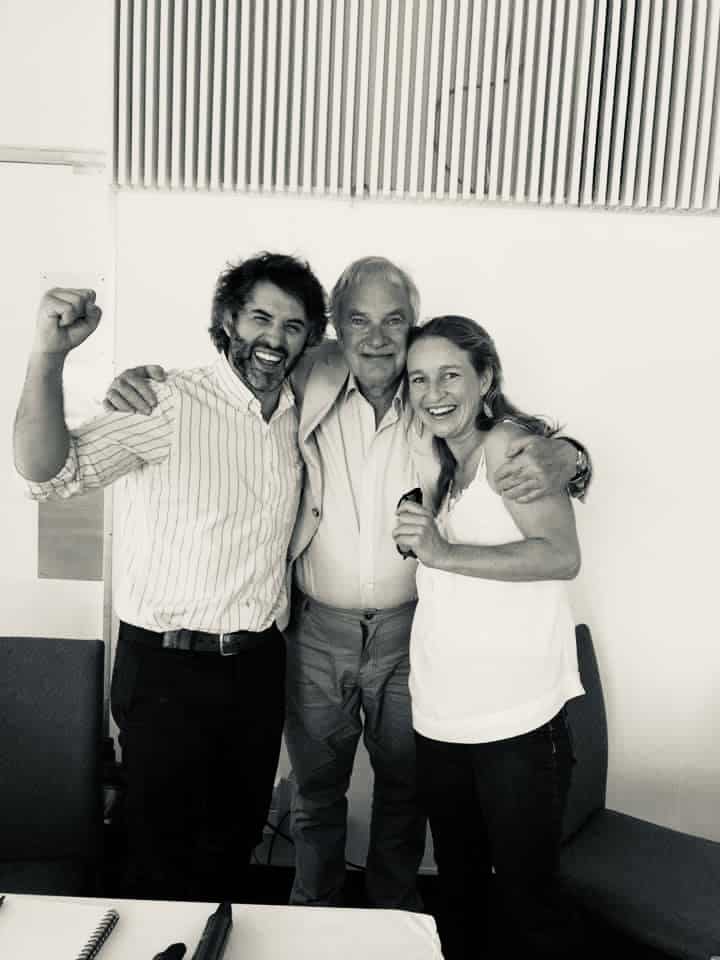
Compassion Focused Therapy: Pictured here with Prof Paul Gilbert and A/Prof James Kirby
Studying Compassion Over the Years: What I Have Learned
Over the years, I have found myself returning to compassion again and again. It was through compassion that I began to heal from deep personal loss – starting very gently by praying for others, whomever crossed my path. It absolutely worked to alleviate suffering.
Historically, I believed compassion was mostly about how we treat other people. But through internal reflection, study, teaching, and lived experience, I realised that compassion is equally about how we relate to ourselves.
I began to contemplate:
- Healthy Boundaries: What does a healthy relationship in work and life actually feel like? What happens inside us when we say NO? How might that no create the necessary space for a vital YES?
- Relational Dynamics: Why do we feel compelled to rescue others when they haven’t asked? What does it feel like to offer support without trying to save someone?
- Self-Compassion: What does it truly mean to extend compassion inward?
Much of our suffering stems not just from painful events, but from the guilt, shame, and resistance we hold around them. We often try to think our way out -telling ourselves to “stay positive” or swapping out bad thoughts for good ones.
Yet positive thinking alone falls short. As compassion researcher Kristin Neff notes, forced positivity can act like a temporary bandage over an unhealed wound.
An alternative doorway opens through compassionate self-inquiry, originally taught to me by Byron Katie, but modified below:
- Is this thought really true?
- Where do I feel this thought in my body?
- Where would I be without this thought?
- Can I turn this thought around – towards self (Recognising, that many of our judgements are projections of the self).
Asking these questions without self-criticism can open a quiet freedom. Compassion offers a transformed relationship with suffering, rather than an escape from it.
At the deepest level of self-inquiry, Sri Ramana Maharshi points towards the realisation of unity: “All is One.”
When we see the universe as our own body, compassion and harmlessness arise naturally.
Teachings below: