

Tola literally means “poising one’s self”.
Variations appear such as Dolasana (Swing pose), Tolasana (Scale pose), or Utthita Padmasana (Raised Lotus pose).
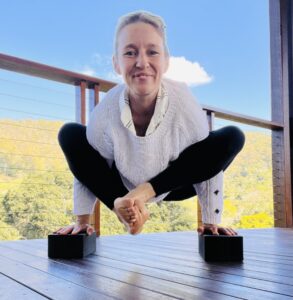
It is a hand-balancing asana used in modern yoga.
How to Perform Tolasana
1. Sit in Padmasana. Put the palms on the ground beside the hips.
2. During an exhalation, press the hands against the ground, contract the abdomen muscles, and pull up the legs and buttocks away from the ground.
3. Hold in this suspended position for 10-15 seconds. Then during an exhalation, lower your buttocks and legs, change the position of the cross of your legs and repeat the pose for the same duration of time.
Tolasana Benefits
Western Physiology
- Tolasana stretches and strengthens the muscles:
- It helps strengthen the abdomen, arms and wrist muscles (Scale Pose. Yoga Journal. 2007).
- It increases the flexibility of the hips (Tolasana Yoga Pose – Benefits of Tolasana | Total Yoga. Total-yoga.org. 2022).
- It stretches the hamstrings (Tolasana Yoga Pose – Benefits of Tolasana | Total Yoga. Total-yoga.org. 2022).
Yogic Physiology
Strengthens heart lines and pulls parana through the Tala-Hridaya Marma point of the hand (centre of palm).
Increases vata and pitta and reduces kapha.
Contradictions and Cautions
- Individuals suffering from wrist and shoulder injuries should avoid this pose.
- Individuals suffering from knee and ankle injuries should avoid this pose.
- This pose should also be avoided by individuals having tight hips or thighs.
Preparatory Asanas
- Ardha Matsyendrasana
- Baddha Konasana
- Garudasana (arm position)
- Janu Sirsasana
- Padmasana
- Virasana
Follow up Asanas
Tolasana is usually performed as part of the Padmasana sequence. A commonly performed follow-up asana is called Kukkutasana. Here, the hands are pushed into the folds between the thighs and calves, and then, as in Tolasana, the torso and legs come off the floor (Scale Pose. Yoga Journal. 2007).
Tips for Beginners
If you can’t do full Padmasana yet, you can experience the feeling of Tolasana via Ardha Padmasana (Half Lotus Pose). In a half lotus, perform the pose described in steps 2 and 3 above. With this position of the legs, the buttocks will come off the floor, but the outer part of the lower leg and the foot of the lower leg will not (Scale Pose. Yoga Journal. 2007).
Variations
Tolasana is not recommended for students who cannot comfortably do Padmasana. Instead, you can try the similar Lolasana pose. Get on your knees and cross the front of your right ankle with the back of your left as if you were in Simhasana (Lion Pose). Then sit on your right heel and press it against your perineum. Put the hands on the ground (or blocks) as for Tolasana and follow the instructions above. In Tolasana, the raised torso is held fairly upright; but in Lolasana, the back of the torso is fully rounded, and the shoulders are widened (making the back dome towards the ceiling). Release with an exhalation, change the ankle cross and repeat for the same amount of time.
Modifications and Props
With your hands on the floor, it is often difficult to lift your feet off the floor. Use a block under each arm to lengthen the arms and help elevate the legs.
Deepen the Asana
To help lift the trunk and legs, pull the inside of the groin into the centre of the torso along the front of the spine.
References
Scale Pose. Yoga Journal. (2007). Retrieved 16 July 2022, from https://www.yogajournal.com/poses/scale-pose/
Tolasana Yoga Pose – Benefits of Tolasana | Total Yoga. Total-yoga.org. (2022). Retrieved 16 July 2022, from http://total-yoga.org/knowyouraasana/tola-asana/
If you would like to contact Celia to learn more about the meditation teacher training journey, please do visit our Meditation Teacher Training Page or find us on Facebook or Instagram or contact Celia directly.