
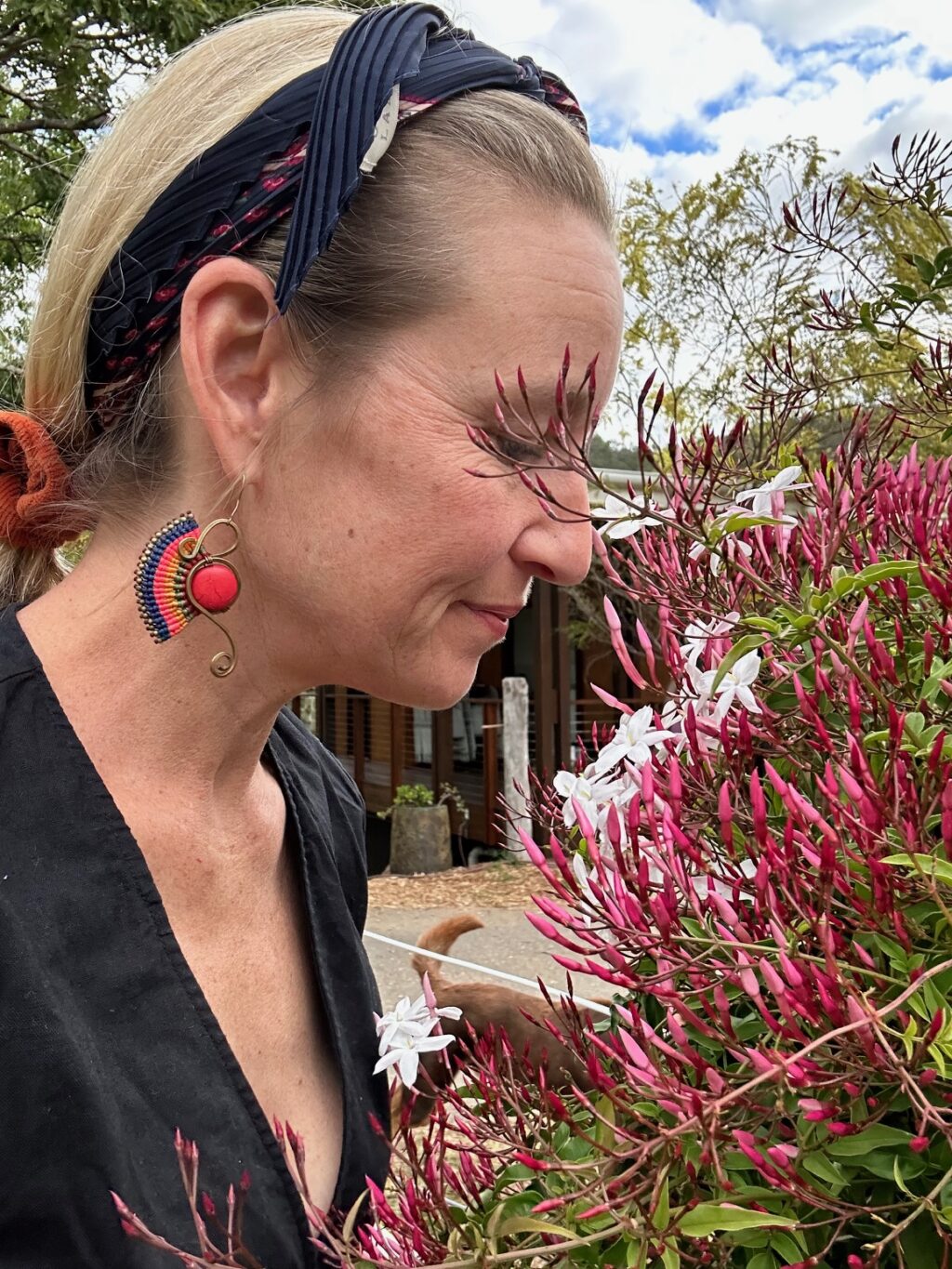
The concept of plants being considered sacred has deep roots in ancient cultures, and India, with its rich history, exemplifies this reverence, as reflected in the Vedas. Rigveda and Atharvaveda specifically delve into the historical significance of plants, showcasing their integral role in ancient civilisations. The intertwining of nature and human life during these times is evident, with plants serving basic needs like firewood for cooking and valued as Bhesaja or medicinal substances.
Hinduism, the predominant religion in India, further solidifies this connection by viewing trees as deities, giving rise to the long-established tradition of tree worship. The interdependence between ancient civilisations and nature was profound, recognising trees and plants as resources and essential contributors to survival by providing oxygen.
The intertwining of medicinal and religious importance has been crucial in establishing the profound significance of trees and plants in Hindu culture.
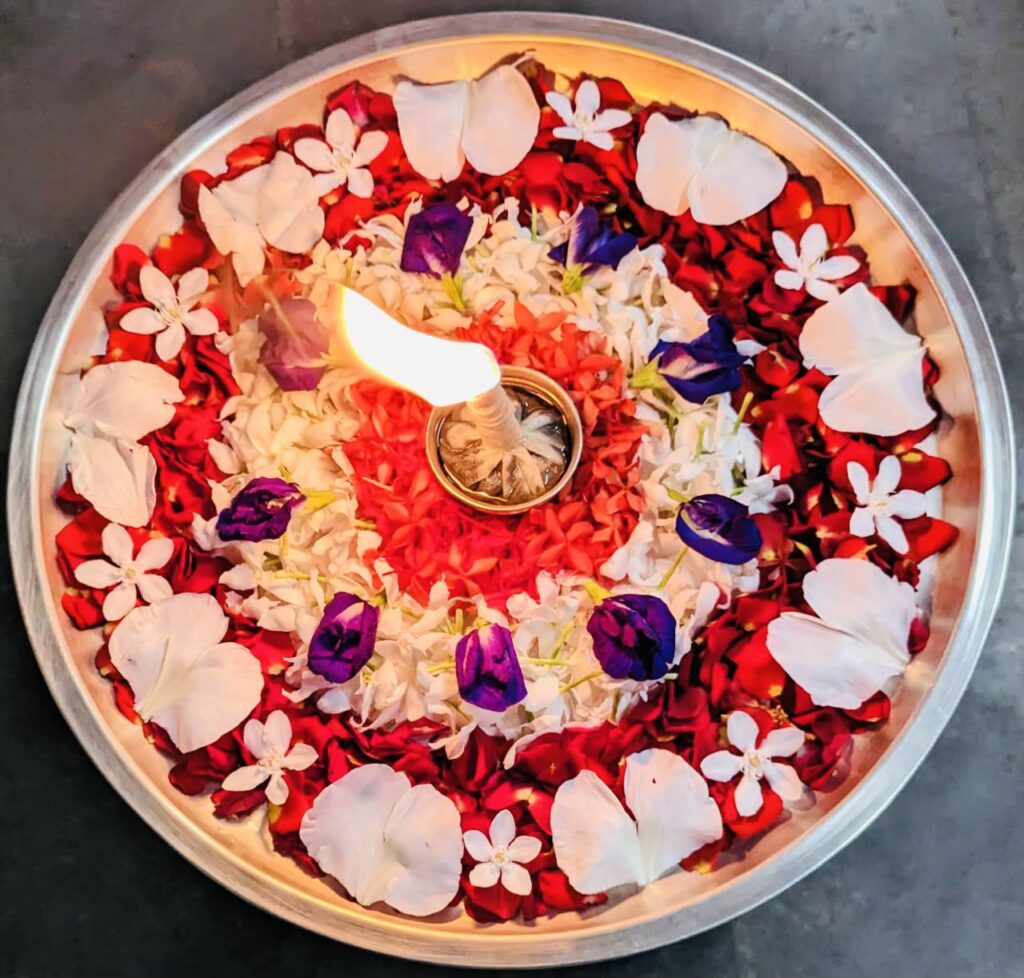
Jasmine, a plant associated with Lord Shiva, holds a special place in Vedic texts. Its aroma is believed to have a calming effect on the mind by acting on receptors, showcasing the intricate relationship between nature and mental well-being. Whilst it is believed to have this calming effect, the science shows a stimulating effect and Ayurveda agrees: with excess Vata in the nervous system, the plant should be used with caution. It is used instead to reduce Pitta or Kapha. The flowers of the jasmine plant, renowned for their pervasive fragrance, play a pivotal role in various aspects of Hinduism and Ayurveda.
Furthermore, jasmine is linked to Kama, the god of love and erotics, with its enduring fragrance considered to possess aphrodisiac qualities. The sweet and captivating scent of jasmine has long been associated with romantic and passionate feelings, symbolising the spirit of love and sensuality.
In Buddhism, jasmine is revered for its compassionate and empathetic symbolism. It represents kindness towards all living beings, emphasising the interconnectedness of nature and spirituality.
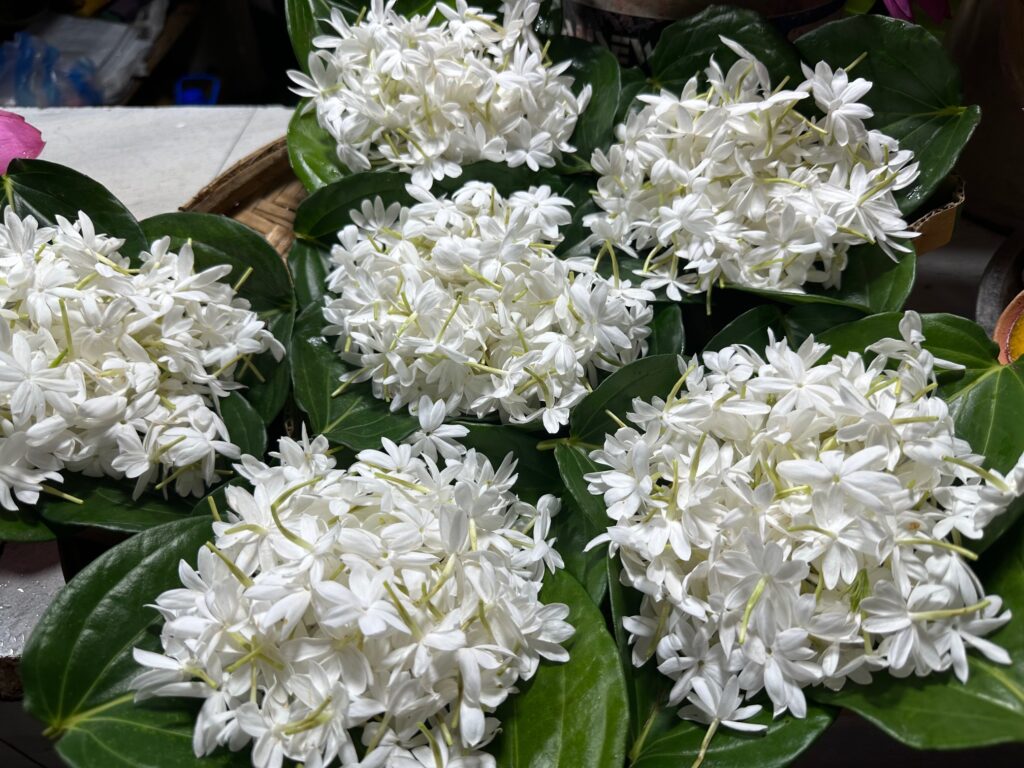
From a medicinal perspective, jasmine flowers, scientifically known as Jasminum grandiflorum, have proven health benefits. Jasmine flowers have been found to be strongly cooling and calming, exhibiting antibacterial, antiviral, and antitumour actions. Notably, they are known to strengthen the lymphatic system and are beneficial in various cancers, including breast cancer.
A study on jasmine oil supports its stimulating effects, demonstrating increased breathing rate, blood oxygen saturation, and blood pressure. The findings suggest its potential use in aromatherapy for alleviating depression and uplifting mood in humans.
“Jasmine oil was applied topically to the skin of the abdomen of each subject. Compared with placebo, jasmine oil caused significant increases of breathing rate, blood oxygen saturation, and systolic and diastolic blood pressure, which indicated an increase of autonomic arousal. At the emotional level, subjects in the jasmine oil group rated themselves as more alert, more vigorous and less relaxed than subjects in the control group. This finding suggests an increase of subjective behavioral arousal. In conclusion, our results demonstrated the stimulating/activating effect of jasmine oil and provide evidence for its use in aromatherapy for the relief of depression and uplifting mood in humans.”
As we explore the rich tapestry of ancient traditions and the profound connection between nature and well-being, the significance of jasmine emerges as a fragrant bridge between spirituality, health, and culture.
Jasmine Flowers (Jasminum grandiflorum; Oleaceae)
Botanical Name: Jasminum grandiflorum
Family: Oleaceae
Sanskrit Name: Jati
Part Used: Flowers
Energetics: Bitter, astringent/cooling/pungent
Constitution (Prakriti):
Kapha and Pitta reduced, and Vata increased
Tissues Affected: Plasma, blood, bone, marrow
Systems Affected: Nervous, circulatory, reproductive
Actions:
- Antibacterial
- Hemostatic (Stops Bleeding)
- Emmenagogue (Stimulates or increases menstrual flow)
- Aphrodisiac
- Nervine
- Refrigerant (Powerfully cools the body. Can be helpful in cases of heat conditions).
- Alternative (Restores the body’s proper function by cleansing the blood and balancing blood chemistry. Pacification of Pitta in Rakta (vital blood serum). Traditionally used to revitalise and detoxify after a long winter).
Health Conditions and Indications:
- Emotional disturbances
- Headaches
- Fever
- Sunstroke
- Conjunctivitis
- Dermatitis
- Burning urethra
- Bleeding disorders
- Bacterial or viral infections
- Lymphatic cancer
- Bone Cancer
- Hodgkin’s disease
Precautions:
- Severe chills
- High Vata
Preparation:
- Infusion (hot or cold, do not boil)
- Powder (250 to 500 mg)
- Paste
- Medicated oil (as per study)
References
1. Hongratanaworakit T. Stimulating effect of aromatherapy massage with jasmine oil. Nat Prod Commun. 2010 Jan;5(1):157-62. PMID: 20184043.
2. Yoga of Herbs: An Ayurvedic Guide to Herbal Medicine| Author: David Frawley and Vasant Lad First Published, 1986, new edition 2001
If you would like to contact Celia to learn more about the meditation teacher training journey, please do visit our Meditation Teacher Training Page or find us on Facebook or Instagram or contact Celia directly.