
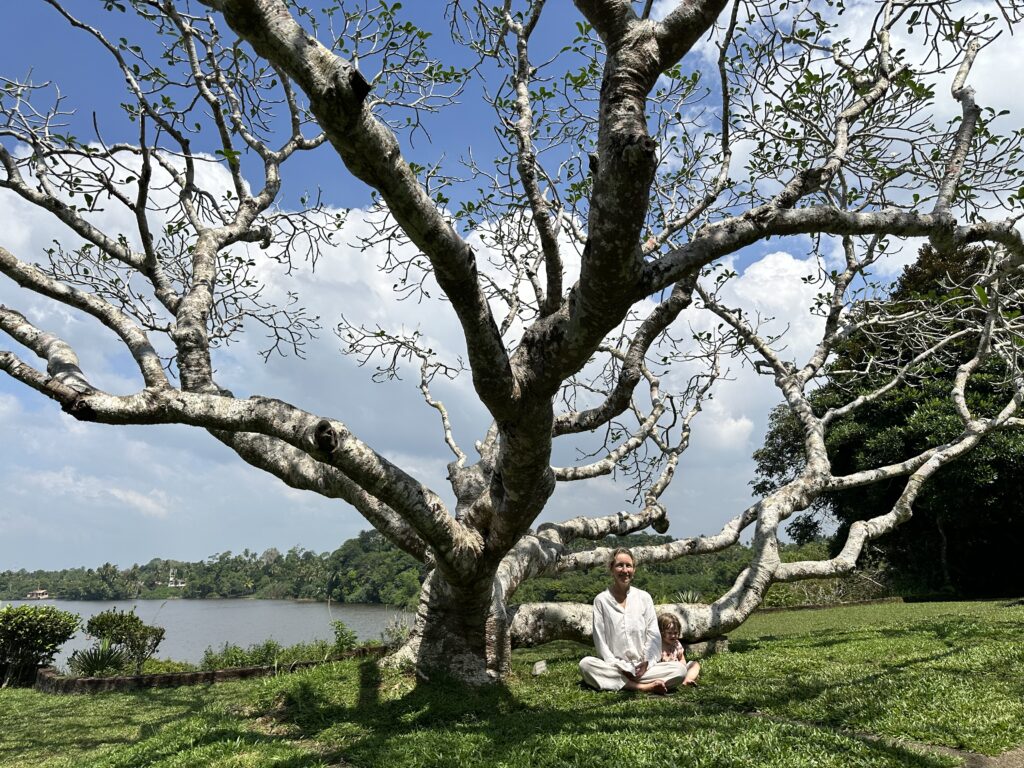
“As long as you think that the cause of your problem is “out there”—as long as you think that anyone or anything is responsible for your suffering—the situation is hopeless. It means that you are forever in the role of victim, that you’re suffering in paradise.”
― Byron Katie
I have been reflecting on how we can gently value our contented state while exploring Buddhism’s depths and natural wonders in Sri Lanka.
Here are the five ways to be valuable in living a contented life.
1. Cultivate paradise within.
Meditation aids us in finding the portable paradise we can carry in our hearts. Paradise is found within and without, reflected back to us by the beauty of our natural surroundings. Beauty in nature brings us clarity within, and we see beauty everywhere when we know it within.
2. Giving away our usual vices.
Embracing a departure from our customary vices, we liberate ourselves by fasting the mind from its habitual impressions. Through cultivating a disciplined mind in small steps, we find it easier to relinquish our typical patterns of control and expectations placed on the present moment. We invite suffering whenever we impose a demand on the moment, seeking something or wishing to eliminate something. Such demands bind us to the conditioned mindset, chained to the dream-like state of the conditioned mind.
3. Stop arguing with reality.
When we stop arguing with what is, we find acceptance and a sense of flow with life. When we argue with reality, we find ourselves suffering in paradise.
“When you argue with reality, you lose, but only 100% of the time.”
― Byron Katie
4. Concentration in all that we are doing provides insight.
Buddhism reminds us that concentration on what is happening now relieves our suffering and helps us to cause no future suffering.
Satipatthana is the practice in Buddhism. It refers to the “Four Foundations of Mindfulness,” which are systematic meditation techniques to develop mindfulness and insight. Practitioners engage in mindful observation of the body, sensations, thoughts, and all other arising phenomena to deepen their understanding of the nature of existence and gain insight into impermanence, suffering, and the nature of the self. Satipatthana is an essential aspect of mindfulness meditation within the Buddhist tradition and is considered a path to liberation and enlightenment.
5. Questioning the doer, the “I” thought.
Explaining this technique in writing can be complex as it requires some familiarity with Vedanta, but it is a highly valued meditative practice, revered by Vedantic teachers as the most direct route to uprooting the mind. Vedanta’s primary method, self-enquiry (atma-vichara), was followed by many Indian yoga teachers and sages to comprehend the deeper aspects of Yoga.
As a practical exercise, Atma-vichara dismantles negative thought patterns, addressing the root cause of mental impressions akin to modern Cognitive Behavioral Therapy (CBT) principles. Through self-inquiry, ego-consciousness is redirected towards the Divine “I am” at the core of one’s being, dissolving any sense of a separate self. Widely recognised as the paramount approach in the Yoga of Knowledge (Jnana Yoga), Self-inquiry is traditionally esteemed as the highest form of Yoga.
(If your interest in this topic is deepening, I will be offering a 4-day course in Vedic Meditation Teacher training, Ayurvedic Psychology & Spiritual Counselling for those interested from March 15-18, 2024 – Celia Roberts)
In conclusion, Byron Katie’s wisdom reminds us that placing blame or responsibility “out there” perpetuates a sense of victimhood, leading to suffering even in paradisiacal circumstances. However, by embracing the five practices discussed — cultivating inner paradise, relinquishing our customary vices, accepting reality as it is, practising mindfulness through Satipatthana, and questioning the “I” thought — we can navigate the complexities of life, gently find contentment within, and dissolve the chains that bind us to suffering.
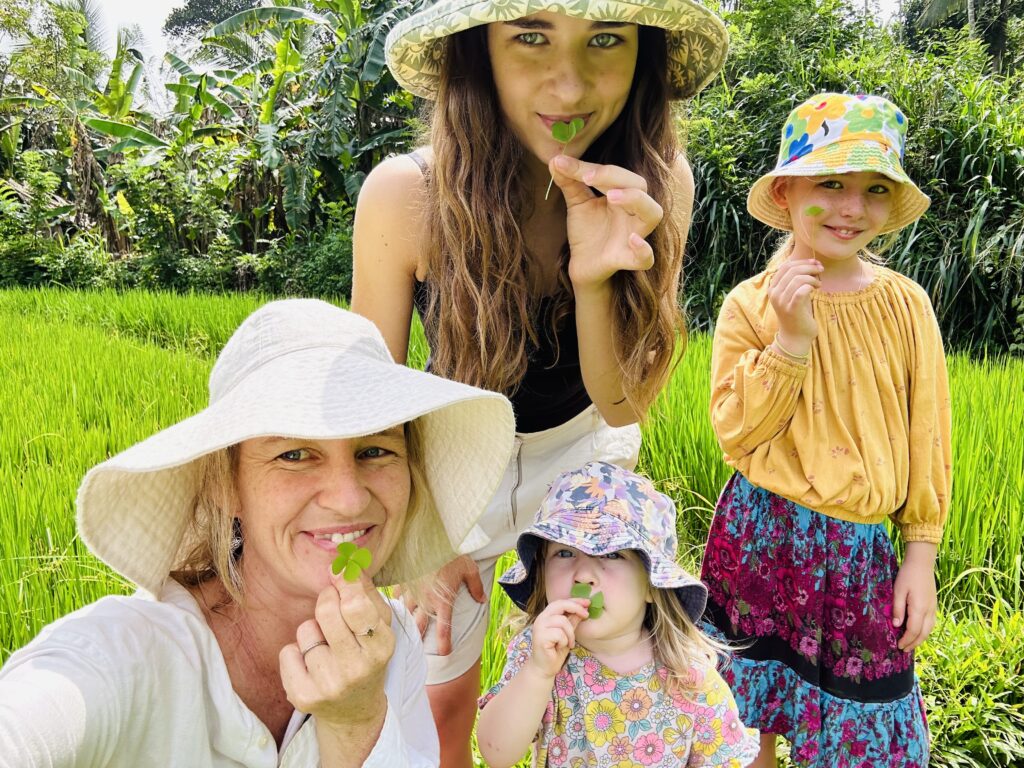
If you would like to contact Celia to learn more about the meditation teacher training journey, please do visit our Meditation Teacher Training Page or find us on Facebook or Instagram or contact Celia directly.