Western Physiology
Vrikshasana has a therapeutic effect on mental and physical health.
- Vrikshasana improves mental health:
- It helps to relax the mind and relieve anxiety (Tree Pose. Yoga Journal, 2022).
- Vrikshasana stretches and strengthens the muscles:
- It helps stretch the groins and inner portion of thighs, shoulders and chest.
- It helps in toning the muscles of your legs.
- It helps in strengthening the calves, ankles, thighs and spine.
- Other therapeutic effects of Vrikshasana include but are not limited to:
- It relieves the pain from sciatica and also in reducing flat feet.
- It helps improve balance and gives you a sense of poise (Yelluru et al., 2016).
Yogic Physiology
For people with a Vata dosha, tree pose can help to ground and calm the mind. It is also a good pose for improving balance and concentration.
For people with a Pitta dosha, tree pose can help to cool and calm the mind. It is also a good pose for improving flexibility.
For people with a Kapha dosha, tree pose can help to energise and motivate the mind. It is also a good pose for improving strength and stamina.
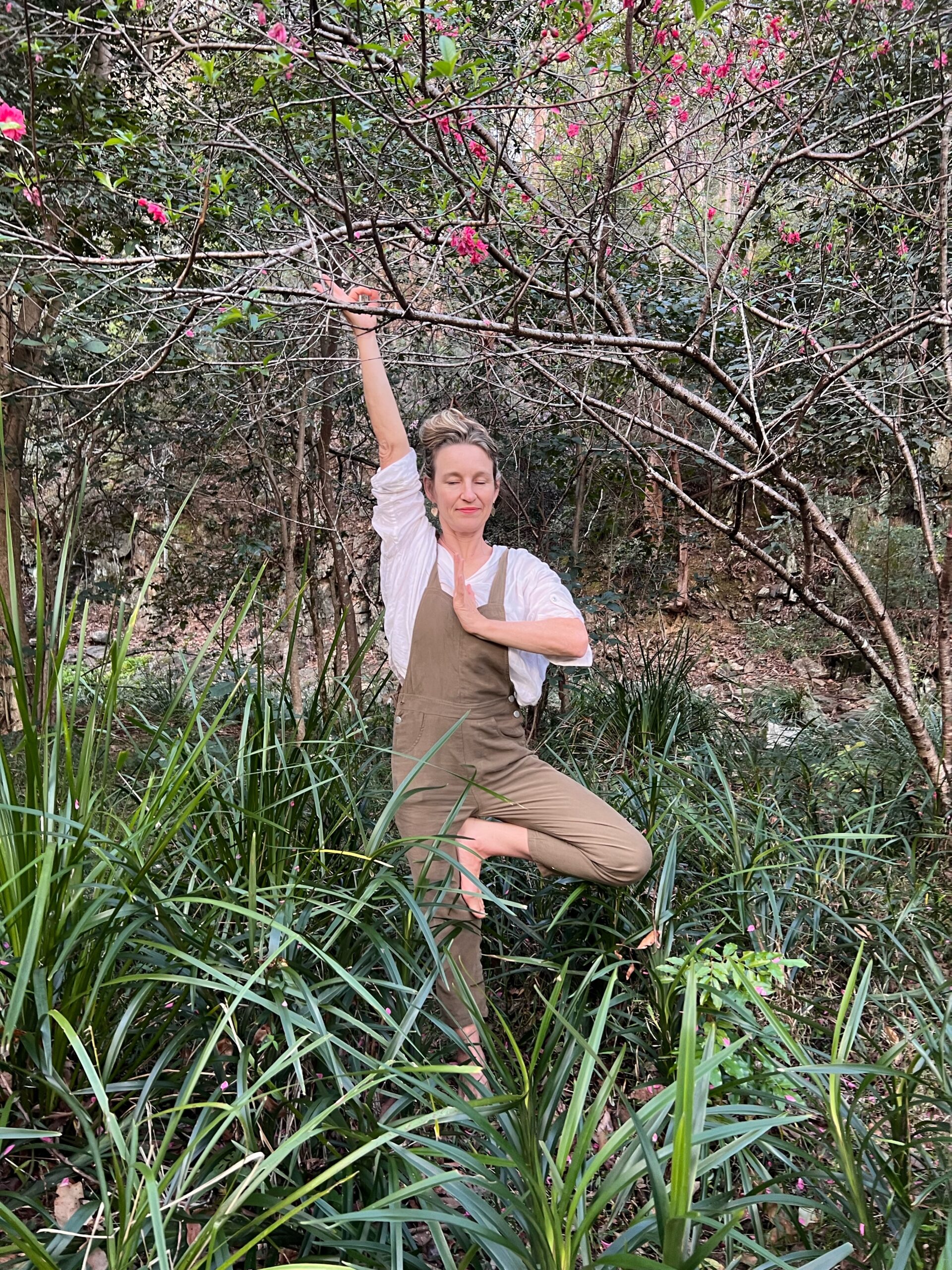
The heart marma point of hands (tala-hridaya) and heart (hridaya) draw together when the hands rest in prayer pose at the chest, pacifying the heart and possibly prompting a sense of self compassion coupled with gentle intention.
Chinese Medicine
It is also a good pose for stimulating the liver and gallbladder meridians.
Contradictions and Cautions
- Individuals suffering from headaches, insomnia and low blood pressure should not perform this pose.
- Those with high blood pressure should avoid raising their arms overhead.
Preparatory Asanas
Follow up Asanas
- Standing poses
Tips for Beginners
If your raised foot tends to slide down the inner standing thigh, put a folded sticky mat between the raised-foot sole and the standing inner thigh.
Variations
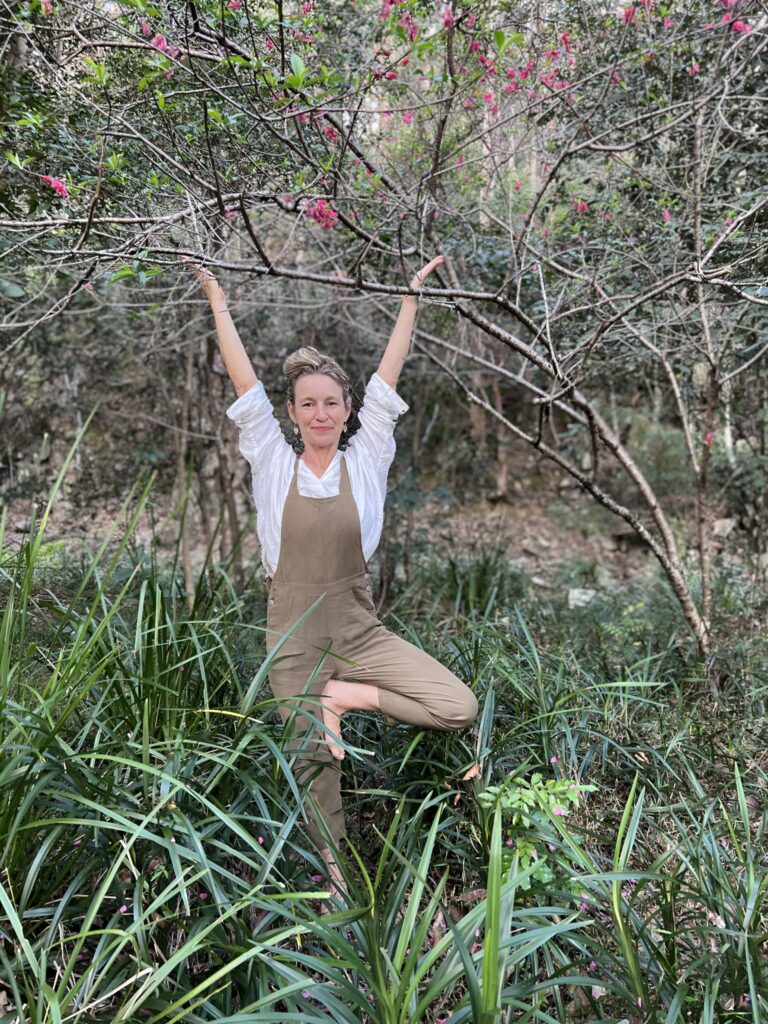
Lift your arms to the ceiling, parallel to each other, palms up, or touch your palms together to form an inverted V with your hands.
Modifications and Props
Practitioners can stand with their back against a wall if they feel unsteady in this position.
Deepen the Asana
Like Tadasana, practitioners can challenge their balance by practising this asana with their eyes closed. Learn to balance without any connection to the external environment.