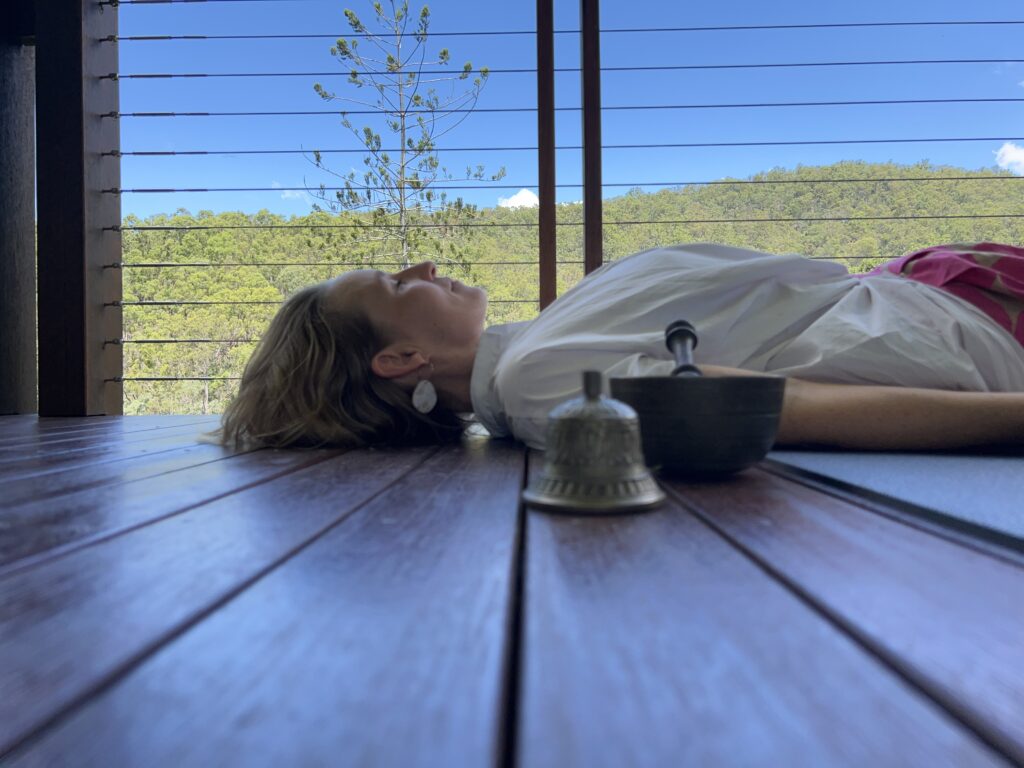
Shavasana

Corpse Pose. This asana is also referred to as Mrtasana or death pose.

How to Perform Shavasana

1. It is essential to place the body in a neutral position in Shavasana. In a sitting position, bend your knees, place your feet on the floor and lean back, putting your weight on your forearms. Move your pelvis, lifting it slightly above the ground and using your hands, move the back of the pelvis in the direction of the tailbone. Then return the pelvis to the ground. On an inhalation, extend or lengthen the right leg followed by the left leg, pushing them through the heels. Soften the groins, release both the legs and turn out your feet equally. Soften the lower portion of the back and narrow the front pelvis.

2. Use your hands to lift the base of your skull away from the back of the neck and move the back of the neck toward the tailbone. Stretch the base of the skull, ensuring that your ears are placed at an equal distance from your shoulders. It is highly recommended that you place a folded blanket under your head so that your forehead sits slightly above your chin, creating some cervical flexion, which lowers heart rate due to the baroreceptors in the neck.

3. Lift your arms toward the ceiling or sky at 90 degrees to the ground. With a side-to-side rocking motion, stretch the back ribs and move the shoulder blades away from the spine. Move the arms towards the ground, stretching them away from the shoulder blades. Place the back of your hands on the floor. Ensure that your shoulder blades rest evenly on the floor. Stretch the collarbones.

4. You have to ensure that your physical body is at peace and your sense organs are pacified in Shavasana. Relax the nose’s wings, the tongue’s root, the gums of the teeth, the inner ear channels, and the skin of the forehead, especially the area between the eyebrows or the bridge of the nose. Sink the eyes into their hollow, move them downward, and focus your gaze on the heart. Relax your brain towards the back of the head.

5. Hold in this asana for 5 minutes for every half an hour of yoga practice. This reduces cortisol. To return back, exhale and roll back to one side of the body (preferably right). Take a couple of breaths. Exhale and place your hands on the floor and stretch your torso, moving your head slowly after this movement. Try always to bring the head last.

Shavasana Benefits

Western Physiology

Shavasana has a therapeutic effect on mental and physical health.

  • Shavasana improves mental health:
    • It helps relieve stress and symptoms of mild depression (Bera et al., 1998; Guner & Inanici, 2015).
    • It helps relax and calm the body and mind (Guner & Inanici, 2015).
  • Other therapeutic effects of Prasarita Padottanasana include but are not limited to:
    • It helps in reducing headaches and fatigue (Guner & Inanici, 2015).
    • It helps lower blood pressure (Guner & Inanici, 2015).
    • It helps reduce insomnia symptoms (Guner & Inanici, 2015).

Yogic Physiology

This posture is said to be the hardest to master, as one must attempt to master the mind and thoughts, reducing the chitta vrittis, whirlpools of the mind.
It is also a wonderful pose in which to explore the mastery of prana and bring the five pranas into awareness and eventually deep stillness.
Those with Kapha tendencies should hold the pose for 5 minutes and those with Vata or Pitta tendencies, ideally for twenty minutes.

Contradictions and Cautions

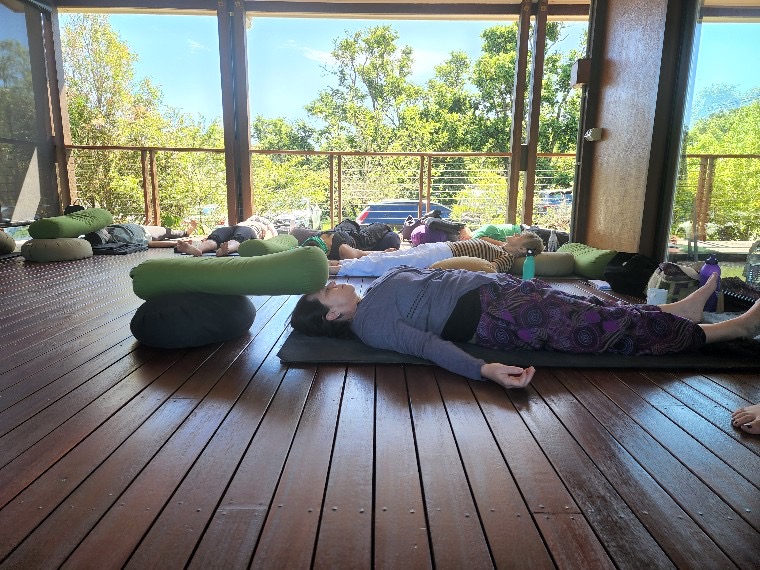
  • Those with injury or back discomfort, do this asana with your knees bent and your feet flat on the floor with your hips apart; you can also keep your knees bent in a bolster.
  • During pregnancy, while doing this pose, you should raise your head and chest on a bolster.

Preparatory Asanas

Shavasana should conclude both your asana and your pranayama practices.

Tips for Beginners

It is sometimes difficult for practitioners to release the heads of the femurs and soften the groin in this posture. This brings tension all over the body and restricts breathing. Take two ten-pound sandbags and place one on each upper thigh parallel to the groin crease. Then imagine that the heads of the femurs drop from the weight down to the floor.

Modifications and Props

Shavasana is usually performed with the legs turned out. Sometimes, however, after an asana practice that involves a lot of outward rotation of the legs (as in standing poses), it is convenient to perform this pose with the legs turned inward. Take the yoga belt and make a small loop. Then sit on the ground with your knees slightly bent and loop over your big toes. Lie on your back and turn your hips inward with your heels apart. The loop will help maintain the internal rotation of the legs.

To reduce heart rate, use an eye pillow, which activates the ocular-vagal reflex and lowers heart rate.

To pacify the nervous system, place weight on the body, bolsters and sand bags and heavy blankets.
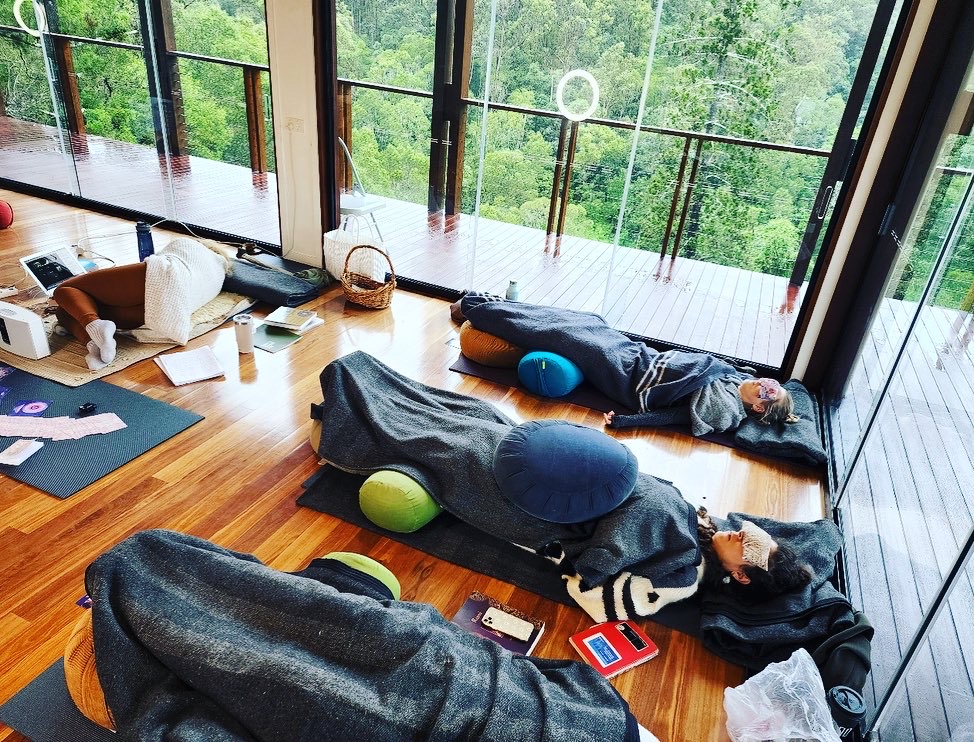
Deepen the Asana

To release the brain and relax the mind in this pose, take a block and bolster. Leaning back on the floor, place the block on the floor above your head. The block should lie approximately one bolster length from the head with one of the bolster ends lightly touching the top of your head. Rub the skin of the forehead towards the eyebrows before settling fully into the pose and the final placement of the bolster end on the forehead. Then let the brain sink away from this load.
References

Guner S, Inanici F. Yoga therapy and ambulatory multiple sclerosis Assessment of gait analysis parameters, fatigue and balance. J Bodyw Mov Ther. 2015 Jan;19(1):72-81. doi: 10.1016/j.jbmt.2014.04.004.

Bera TK, Gore MM, Oak JP. Recovery from stress in two different postures and in Shavasana–a yogic relaxation posture. Indian J Physiol Pharmacol. 1998 Oct;42(4):473-8. PMID: 10874346.

If you would like to contact Celia to learn more about the meditation teacher training journey, please do visit our Meditation Teacher Training Page or find us on Facebook or Instagram or contact Celia directly.

Yoga Teacher Training Courses

World recognised courses that offer a paramount understanding of the connection between the Western Medical Model and the Ancient Science of Yoga: enriching programs that foster teachers of integrative lifestyle medicine, job ready for a future in allied health.
Learn more
Scroll to Top

Be Inspired To Practice

Join us regularly as we share an array of inspirational articles related to Mind-Body Medicine, Complimentary Yoga and Meditation Classes, Yoga and Meditation Teacher Training special offers, and share our Registered Continued Professional Development opportunities.

Simply enter your name and email in the form below.

  • This field is for validation purposes and should be left unchanged.