
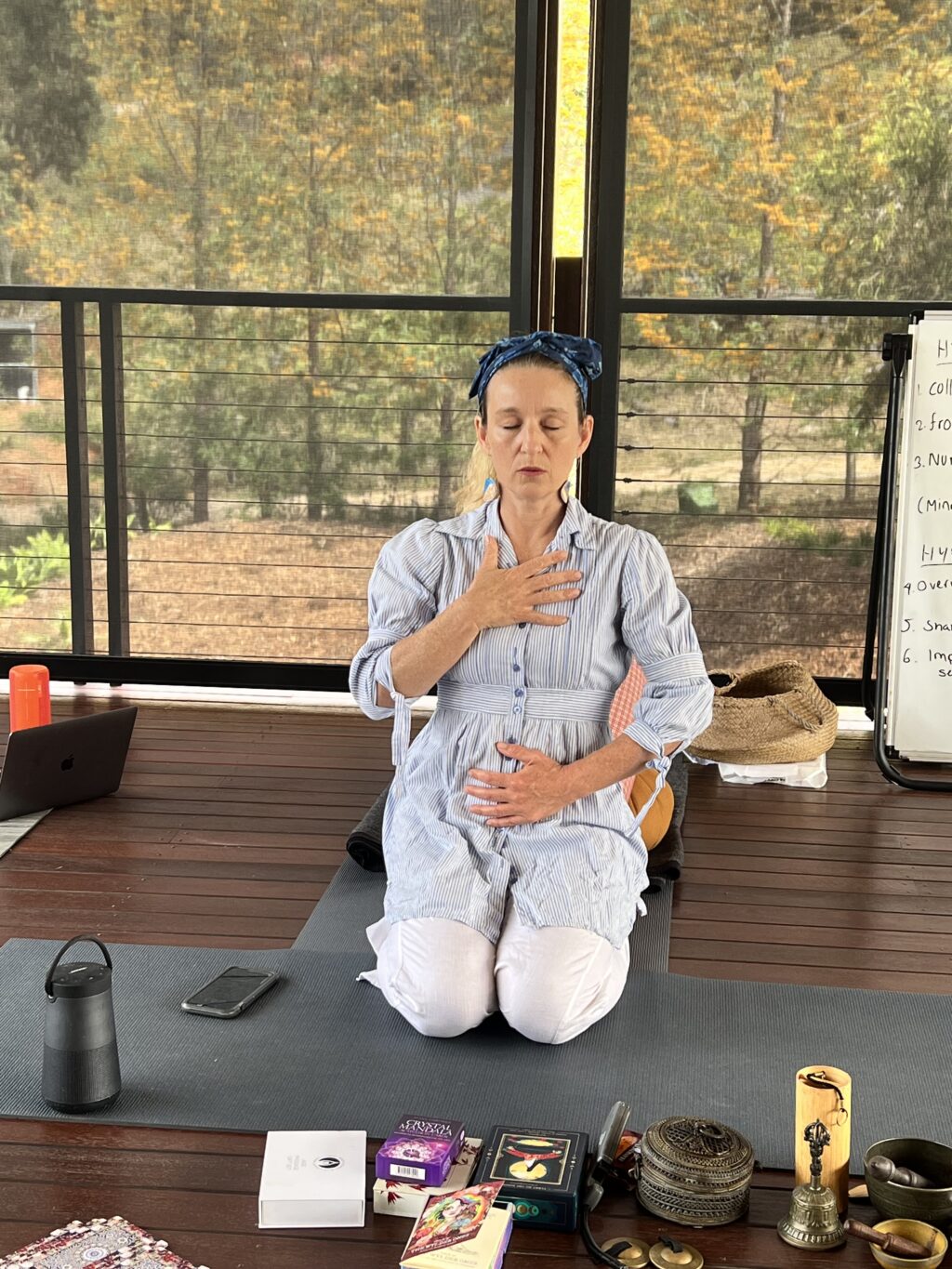
(Understanding The Three Gunas and PolyVagal Theory)
This article introduces a yoga therapy model and trauma-informed meditation practice aligned with Polyvagal Theory (PVT), forging a connection between autonomic nervous system regulation and holistic well-being. It explores the synergy between the neural foundations of Polyvagal Theory and the ancient yogic concept of the gunas, elucidating how these frameworks enrich our comprehension of yoga therapy’s contributions to physical, mental, and social wellness.
The Gunas, recognised as the Qualities of Material Nature, constitute an integral aspect of Prakriti, the essence believed to encompass all facets of the material world. These three gunas serve as fundamental architects, sculpting the distinct characteristics of material entities through their ever-fluid proportions. Sattva embodies pleasure, tranquillity, and illumination, Rajas epitomises energy and turbulence; and Tamas embodies inertia and indifference. These gunas coexist harmoniously, much like the components of a lamp collaborating to provide illumination. Mastery of understanding and managing these gunas is at the core of yoga practice, guiding individuals to impartially observe and embrace them, thereby augmenting their capacity for enduring well-being, even amidst life’s challenges.
Polyvagal theory introduces a nuanced perspective on the autonomic nervous system (ANS), challenging the traditional binary view of stress and relaxation responses. It recognises the coexistence of various ANS activation levels, underscoring the pivotal role of the vagus nerve, which emanates from distinct brainstem regions responsible for both relaxation and threat responses. Trauma can trigger either the “fight, flight, freeze” sympathetic response or a shutdown marked by hypotonia and disconnection. Beyond its physiological functions, the vagus nerve intricately networks with facial, head, throat, and inner ear structures, nurturing social connection when activated for relaxation. This activation decelerates the heart rate and heightens the perception of facial expressions, auditory cues, and voice quality. Diminished vagal tone, reflected in heart rate variability, impedes these facets of human connection. Consequently, yoga can activate the vagus nerve, fostering relaxation and cultivating connection, compassion, and empathy.
Yoga, often described as a “top-down, bottom-up” practice, exemplifies its potential to influence body and mind. The bottom-up approach employs postures and pranayama to impact the autonomic nervous system, subsequently shaping thoughts and emotions. Conversely, the top-down approach uses imagery, mantras, or meditation to modify the autonomic nervous system state, affecting the body’s physiological systems. Ancient yogic teachings introduce the concept of the gunas, representing the three qualities of material nature—rajas (activity), tamas (solidity), and sattva (clarity). These qualities permeate the spectrum of existence, from physical objects to thoughts and emotions. Yoga aspires to harmonise these gunas within the mind and body. Intriguingly, Polyvagal Theory parallels these gunas and autonomic states, aligning rajas with the “fight or flight” response, sattva with the social engagement system, and tamas with the dorsal vagus response, unveiling the intricate interplay between ancient wisdom and contemporary neuroscience.
Residing Within the Window of Receptivity: Exploring Variations in Arousal
HYPOAROUSAL ZONE (Tamas guna in Yoga)
Parasympathetic “Immobilization Response” (Insufficient Arousal)
Indicators of being in this state include emotional numbness, a sense of emptiness, disconnection, shame, reduced activity, passivity, feeling shut down, difficulty asserting oneself, and a lack of emotional expressiveness.
HYPERAROUSAL ZONE (Rajas Guna in Yoga)
Sympathetic “Fight or Flight Response” (Excessive Arousal)
Signs of being in this state involve tension, trembling, heightened emotional reactivity, defensiveness, racing thoughts, intrusive imagery, overwhelming emotions, a pervasive sense of being unsafe, obsessive or repetitive cognitive processing, hypervigilance, impulsivity, and feelings of anger or rage.
OPTIMAL AROUSAL ZONE (Sattva Guna in Yoga)
Within the Ventral Vagal “Window of Receptivity”
Indicators of being within this range encompass the ability to feel and think simultaneously, experiencing empathy towards oneself and others, the ability to tolerate one’s emotions, present moment awareness, an open and curious attitude, awareness of personal and interpersonal boundaries, adaptive reactions to suit the situation, and a feeling of safety and security.
Guidelines for Yoga Therapists and Meditation Teachers: Bringing Students Back into the Window of Tolerance
Overwhelm:
- Sit in a chair or on a mat with feet or buttocks planted firmly on the ground or stand with an extended spine.
- Slowly scan your environment, naming 5 objects in your field of vision to ground yourself.
Shaking or Trembling:
- Take slow, deep breaths while seated on a chair or sofa or on the ground in Shavasana or Child’s Pose.
- Wrap a yoga blanket around yourself, including your head if it feels comforting.
Numbness:
- Gently squeeze your forearms or even your legs with opposite hands.
- Engage your senses by observing your surroundings through sight, sound, and smell.
- Consider mindful touch to increase awareness.
Hyper-Vigilance:
- Lengthen your spine and focus on your breath.
- Pay attention to the rising and falling of your breath while being mindful of your chest or belly.
- Rub your Palms vigorously and cup the eyes. This pressure and mindful touch slows the heart rate by stimulating the ocular-vagal reflex into calm.
Accelerated Heart Rate:
- Shift your attention away from the heart area. Focus on the outbreath to slow the heart rate or Hum to extend the outbreath even further than breath alone.
- Focus on the sensations in your feet, feeling grounded and connected to the floor or earth. Practice Standing Meditation.
- Go outside and look to the horizon. Observing a vast sky will slow down the heart rate even more quickly then the breath
Collapsed Feeling in the Body:
- Push firmly against a wall or the ground with extended arms, head up.
- Channel your energy downward through your feet to feel sturdy and grounded.
Impulse to Harm:
- Push against the wall or the ground gently in plank pose or down face dog, focusing on grounding rather than aggression.
- Focu on the breath and redirect your thoughts away from negative impulses by feeling into the body without aggression.
Feeling Disconnected or Depersonalisation:
- Slow down your actions.
- Gently squeeze areas like forearms, calves, or thighs to reawaken your body.
Feeling Frozen or Panicked:
- Sit comfortably and wrap yourself in a yoga blanket.
- Take slow, full breaths, anchoring yourself in the present moment.
- Create a soothing mantra like “I can be present and observe without getting caught in the story.”
- Use a Yoga Mantra or song that you love to shut down the Default Mode Network, the ruminating mind.
Shaking Off Freeze:
- Slowly jump off the ground, shaking your arms out upon landing.
- Mindfully inhale while jumping and exhale fully upon landing.
- Bring the Body to a full shaking meditation for up to 5 minutes or more.
- You can use rock and roll music to awaken the body. (Head Banding music can have the same effect as a warm hug – Reference here)
Using Thoughts:
- Identify your reaction as a defence response, reframing it as “This is just a memory, a story” or “I’m triggered right now and this too shall pass.”
- Remind yourself that you can be present in the moment that is and the only way out of the pain is in.
Mindfully Not Dealing:
- Allow yourself to avoid, dissociate, or disconnect if needed.
- Be mindful of your need to check out and plan to practise self-care exercises when possible.
- Turn off the phone, quieten the system down and allow yourself to be still under the weight of a doona.
This comprehensive approach aims to assist anyone who stores trauma in their body to regain their balance and return to a state of receptivity and well-being, aligning with the principles of yoga therapy and meditation. References include Pat Ogden’s work on affect dysregulation, trauma, and sensorimotor psychotherapy, as well as Daniel J. Siegel’s insights on the developing mind. Additionally, Sullivan et al.’s research on Yoga Therapy and Polyvagal Theory provides valuable insights into the convergence of traditional wisdom and contemporary neuroscience for self-regulation and resilience.
If you would like to contact Celia to learn more about the meditation teacher training journey, please do visit our Meditation Teacher Training Page or find us on Facebook or Instagram or contact Celia directly.