

(Harnessing the Power of Cross-Education for Healing)
In the realm of rehabilitation and strength building, there exists a remarkable phenomenon known as the cross-education effect. This phenomenon reveals that training one side of your body can lead to enhanced strength on the opposite side. In the context of yoga therapy, this one-sided approach becomes a valuable tool, particularly when healing from an injury or seeking to strengthen a specific side of the body. This concept, once rooted in tradition, has evolved and is now supported by extensive research.
When faced with an injury, the temptation to sit and wait for natural healing can be strong. However, this idleness can inadvertently prolong the recovery process and make it more challenging. This is where the concept of “cross-education” comes into play. It involves working on the uninjured side of your body to facilitate the rehabilitation of the injured side. The underlying principle is that when you strengthen the muscles on one side of your body, the contralateral (opposite) side also experiences increased strength. This effect arises from the fact that both hemispheres of your brain govern both sides of your body, thus allowing training on one side to indirectly impact the other.
Scientific evidence supports the effectiveness of cross-education for injury rehabilitation. A study published in Frontiers in Physiology found that four weeks of unilateral (one-sided) leg training led to a remarkable 12% increase in strength and neural drive in the untrained leg on the opposite side. Furthermore, participants in the study reported a reduction in inflammation and pain. Cross-education has proven to be instrumental in mitigating inflammation and pain, while also improving strength and function in the injured limb. It operates by “sparing” healthy muscles from bearing the entire load, thereby expediting their recovery.
Cross-education is not limited to post-injury recovery; it also holds the potential to prevent future injuries. A study conducted by Lepley and colleagues discovered that individuals who exercised their uninjured limb exhibited greater strength and muscle activation in the injured limb when compared to those who remained inactive.
If you are seeking a way to accelerate your recovery and reduce the risk of reinjury, incorporating cross-education into your injury rehabilitation routine is a prudent step. In fact, the practice of yoga therapy often involves working on one side of the body to restore balance, promote repair, and facilitate healing. It’s evident that the wisdom of yoga therapy has become a valuable asset in contemporary pain research and injury rehabilitation.
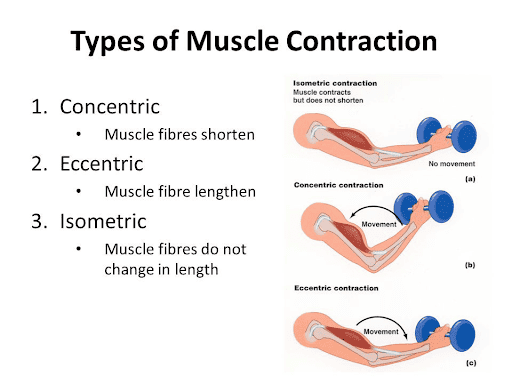
In a notable 2017 study conducted by Cirer-Sastre and their team, an exploration into various training parameters, including sets, repetitions, and types of contractions, aimed to maximise the cross-education effect. Their findings highlighted that the most significant results were achieved through 3-5 sets of 8-15 repetitions of eccentric contractions, interspersed with carefully timed 1-2 minute rest intervals between sets. Additionally, Leung and their colleagues uncovered that the cross-education effect could be further enhanced by incorporating more demanding strength training involving higher loads and increased cognitive engagement. Techniques such as utilising a metronome for precise movement control during training can yield even more substantial results.
The Potential Applications of the Cross-Education Effect are Remarkable:
- Shoulder Pain: In cases where shoulder pain limits you to only performing 50% of your usual bench press and overhead press, adapting to dumbbells can maintain full training intensity on the uninjured side, while cautiously incorporating exercises feasible for the injured side.
- Broken Leg: If you find yourself confined to a cast for an extended period due to a broken leg, it is possible to mitigate the decline in strength in the injured leg by focusing on single-leg exercises for the unaffected leg. Exercises like leg press, leg extension, leg curl, split squat, and calf raises can be valuable tools.
- Knee Osteoarthritis Flare-Up: When confronted with an acute knee osteoarthritis flare-up, consider training the unaffected leg. This approach can lead to a significant 29% increase in strength.
- Recovery from Shoulder or ACL Reconstruction: During the early stages of rehabilitation, when activity on the operated side is limited, continuing to train the opposite side is crucial to maintaining overall strength and function.
Injuries should never serve as an excuse for abandoning physical activity. Neglecting the uninjured side can be circumvented by embracing unilateral training techniques to harness the benefits of the cross-education effect. By adhering to a structured regimen involving 3-5 sets of 8-15 repetitions of eccentric contractions with appropriate rest intervals, and potentially incorporating tools like a metronome for better control, you can achieve even more significant improvements in your rehabilitation and strength development.
The fusion of traditional yogic wisdom and modern research illuminates the path towards a healthier, balanced, and more resilient you.
References
Cirer-Sastre, R., Legaz-Arrese, A., Corbi, F., et al. (2017). Training Parameters to Maximize the Cross-Education Effect. Frontiers in Physiology. https://www.ncbi.nlm.nih.gov/pmc/articles/PMC5423908/
Return to Sport After an Anterior Cruciate Ligament Reconstruction: Are We There Yet? https://www.researchgate.net/publication/358817720_Return_to_sport_after_an_anterior_cruciate_ligament_reconstruction_Are_we_there_yet
Frontiers in Physiology. https://www.ncbi.nlm.nih.gov/pmc/articles/PMC5496707/
Training the Opposite Side: The Magic of the Cross-Education Effect. Health HP. https://www.healthhp.com.au/post/training-the-opposite-side-the-magic-of-the-cross-education-effect
The 3 Types of Muscle Contractions. CrossFit Fargo. https://www.crossfitfargo.com/single-post/2020/03/27/the-3-types-of-muscle-contractions
If you would like to contact Celia to learn more about the meditation teacher training journey, please do visit our Meditation Teacher Training Page or find us on Facebook or Instagram or contact Celia directly.