
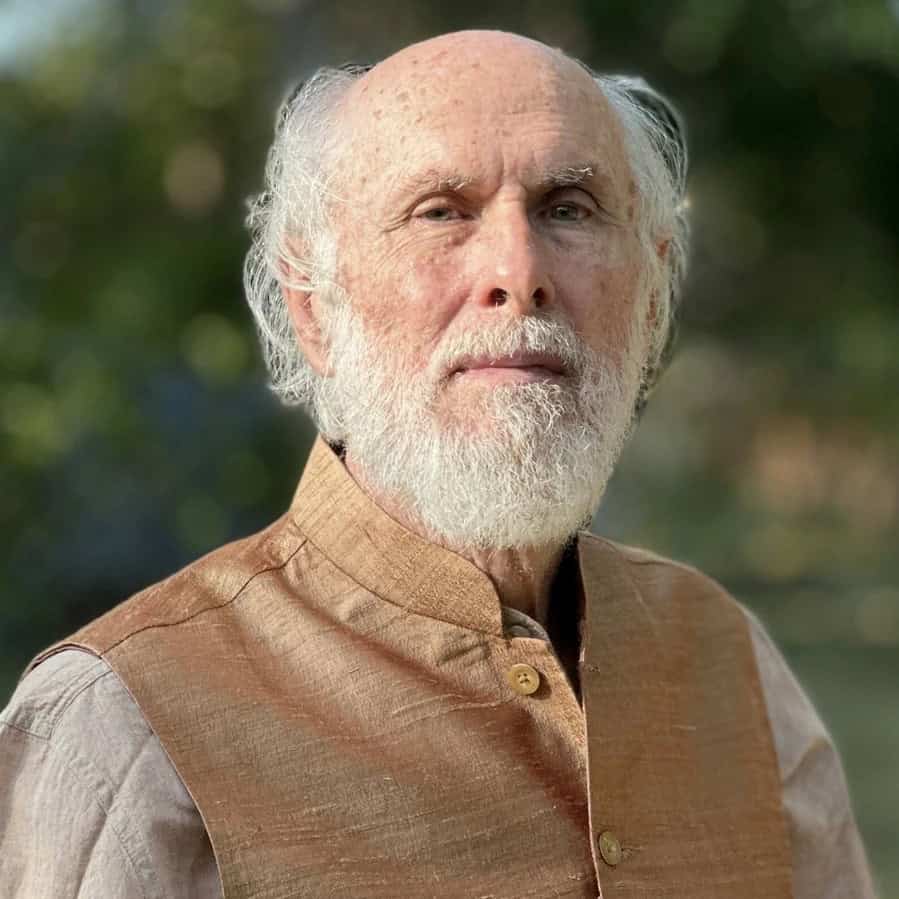
In collaboration with Yoga Australia, Celia Roberts (BIYOME), and Dr David Frawley of the American Institute of Vedic Studies
Q1: The Aim of Sādhanā
“The aim of Sādhanā is to cross all dimensions and become dimensionless.” – Swami Jagadatmananda Saraswati
Celia Roberts: Could you elaborate on this statement and its relevance for modern practitioners of yoga and meditation? How can this vision of transcending all dimensions guide spiritual practice today?
Dr David Frawley: All dimensions are but coordinates of the mind including time and the dimensions of space. The only ultimate all-encompassing dimension is consciousness itself, which takes us beyond all dimensions. Consciousness transcends all outer dimensions as it is our inner Self-awareness.
Q2: The Nature of the World
Celia Roberts: In a previous discussion, you said to myself and students that “the world is not an illusion.”
Dr David Frawley: This should be put in the Upanishadic context: Sarvam khalvidam Brahma — Everything is Brahman.
We discover that we are no longer identified with body and mind through the ego. What we call the world is a misperception of Brahman. When we realize our true Self that illusory world idea disappears. As Vedanta and Ramana teach, there are five factors as sat, chit, ananda, nama, and rupa. If we negate nama and rupa, Satchitananda alone remains.
Q: In the context of Ramana Maharshi’s teachings, could you expand on this view? How does this understanding align with or diverge from traditional Advaita Vedanta interpretations of māyā (illusion)?
Dr David Frawley: Traditional Advaita Vedanta states that everything is Brahman. We need to negate the world idea of the ego based upon identification with body and mind to discover that. Our world idea is an illusion and ignorance of the mind.
Reference: Aham Sphurana – A Glimpse of Self-Realisation
Q3: Illusory Identification with the Body
Celia Roberts: Ramana Maharshi often taught that we do not move the body from place to place, but rather that consciousness itself moves.
From Aham Sphurana:
“The pain does not occur to you as the body; the pain occurs in you as the Self… You are not the body or mind you imagine yourself to be. You are pure consciousness.”
Could you comment on this perspective, especially regarding the practical challenges students face when seeking to transcend pain and body identification?
Dr David Frawley: Certainly. You are pure consciousness. Pure consciousness does not move as it is not part of time or space, body or mind, but is always present. It is the mind identified with the body that gives the impression that the body is moving and gives the ideas of time and space and the feeling of pain as belonging to us.
Reference: Aham Sphurana – A Glimpse of Self-Realisation
Q4: Devikalottaram – Jñānāchāra Vichāra Pāḍalam
Celia Roberts: This profound scripture, revealed by Lord Shiva to Devi Parvati and highly recommended by Ramana Maharshi, teaches that chakras, prāṇa, nāḍīs, subtle bodies, and deities are not essential for direct Self-realisation.
Dr David Frawley: The first thing the guru does is to determine the adhikara or capacity of the student. Advaitic Sādhanā is a high-level practice that requires a capacity that very few have. To reach it, various preliminary practices may be recommended, as in the outer limbs of Yoga. Direct Self-realisation is extremely rare.
Usually, students follow a guru, sampradāya or tradition and do tapas and seva. For direct Self-realisation, we must go beyond body and mind. Yet Vedantic teachings do include chakras, prāṇas, and deities as a means of approaching the Self. Adi Shankara himself taught these in his Saundarya Lahiri and Ananda Lahiri, as well as Sri Vidya and mantra practices.
Shiva and Parvati are deities (devatas) in the Vedic sense, and Shankara wrote stotras to numerous deities, but the ultimate goal is Paramatman.
Celia Roberts: How can yoga teachers and spiritual guides use this understanding to help students avoid esoteric distractions and stay focused on the direct path of Self-realisation?
Dr David Frawley: Very few are ready for the direct path of Self-realisation and Jnana Yoga. We must be humble, honour the guru and tradition, and purify body and mind. The direct path requires much tapas and sādhanā, as the Yoga Sutras also teach in Yamas and Niyamas and the eight limbs of Yoga.
Reference: Verses 13–18
Q5: The Nature of the Guru
Celia Roberts:
From Ramana Part 8: The Guru:
“If a teacher offers activity or teachings to a student, they are not a master, but a killer.”
How should seekers interpret this statement today? What does it reveal about the true nature of spiritual transmission and the role of a genuine guru?
Dr David Frawley: Various teachings and practices exist relative to different capacities of sadhaks. Shankaracharya Maths like Kanchi and Sringeri perform rituals, karma yoga, Hindu festivals, Sri Vidya, and Bhakti, as did Adi Shankara and as Ramanashram does.
What Ramana means is that activity and teachings rooted in the ego and identification with body and mind, which continue the illusion, must be removed. Spirituality is not transmitted from the outside. Paramatman is your true nature, and the guru is one who does not take the Self to be either body or mind but pure consciousness.
Q6: Soma Rasayana for the Mind
Celia Roberts: Could you share your insights on Soma Rasayana, particularly its role in cultivating a sattvic mind and attaining higher states of consciousness?
Dr David Frawley: Soma, in the broader Vedic and yogic sense, is connected with the amrit and Sahasrara, which is called the region of Soma. This is part of Tantric Yoga and Sri Vidya.
Focus on the inner Soma of yogic tradition, with references to rasayana botanicals, especially medhya rasayanas (agents for mental clarity and rejuvenation), as discussed in my book Soma. Ayurveda recognizes various Soma-like herbs for healing and rejuvenating the mind and nervous system, including brahmi, manduka parni, calamus, tulsi, shilajit, and preparations such as Brahma Rasayana.
These are particularly helpful in this digital era in which our minds are easily disturbed and distracted.
Q7: Therapeutic Use of Yantras
Celia Roberts: How can practitioners work with the Śrī Yantra and other yantras for spiritual transformation, healing, and meditation practice?
Dr David Frawley: Sri Yantra and Sri Chakra is a complex sādhanā of mantra, pranayama, devatas, bhakti, etc., that requires extensive instruction and preliminary practices. A yantra is a geometric representation of cosmic forces and divine energies, connected to the subtle body of the Devata or the cosmic powers.
Practical applications include:
- Integrating yantras into daily meditation or as sacred objects in the home, connected to the Guru or Devata.
- Using personalised yantras as therapeutic amulets for healing and illness prevention, including planetary yantras.
- Employing visualisation and concentration to internalise yantras in advanced practices such as holding them in the third eye or the hridaya (spiritual heart).
Dr David Frawley on Yoga, Mantra, Tantra, Yantra, Shakti
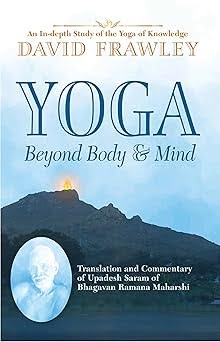
Note my additional books, based largely upon Ganapati Muni’s work:
- Mantra Yoga and Primal Sound
- Inner Tantric Yoga
- Shiva, the Lord of Yoga
- Tantric Yoga and the Wisdom Goddesses
- Yogini Shambhavi addresses these topics in her books etc. and her Shakti Sadhana
If you would like to contact Celia to learn more about the meditation teacher training journey, please do visit our Meditation Teacher Training Page or find us on Facebook or Instagram or contact Celia directly.