Celia Roberts BSc: I hope this message finds you well. I’m reaching out with a specific inquiry that I believe may align with your extensive knowledge and expertise in Ayurveda.
We are currently running a course in Australia focused on the legalised use of psychedelic medicine, specifically training Psychiatrists, Clinical Psychologists, and Doctors to deliver these treatments safely and in compliance with Australian TGA guidelines. The course is titled 200PAP Graduate Certificate in Psychedelic-Assisted PsychoSomatic Therapy and offers psychiatrists, psychologists and mental health professionals continuing professional development, as well as being a Yoga Australia Approved Training Course.
I am particularly interested in your thoughts about utilising Medically Assisted Therapy with legally prescribed cannabis for psychotherapy, especially for pain, trauma, and ego dissolution. This has sparked a deeper interest in exploring the historical and traditional use of cannabis within Ayurveda and Yoga, particularly as a therapeutic agent.
Dr David Frawley: Great to know of your course in Australia, which can provide helpful and innovative information on these subtle topics about the mind and psychology.
Cannabis has long usage in Ayurveda as a pain reliever, nervine, expectorant, and anti-Kapha agent. It appears in formulas such as the Bilwadichurna that is an astringent and antispasmodic aid for digestion, absorption and elimination (though not all Ayurvedic companies include cannabis in the formula today). Curiously, bilwa is an herb sacred to Shiva. Cannabis is used for arthritic pain, nerve pain, asthma, and lung disorders, among other conditions in various dosages, preparations and combinations. The question is whether the effect of cannabis is strengthening or disturbing, which depends upon how it is prepared and used.
Cannabis (bhang is first mentioned in the ancient Atharva Veda), as one of the main botanical Somas, herbs that are said to promote a higher sense of wellbeing, often sacred to Shiva, as opposed to suras, which are alcohol based.
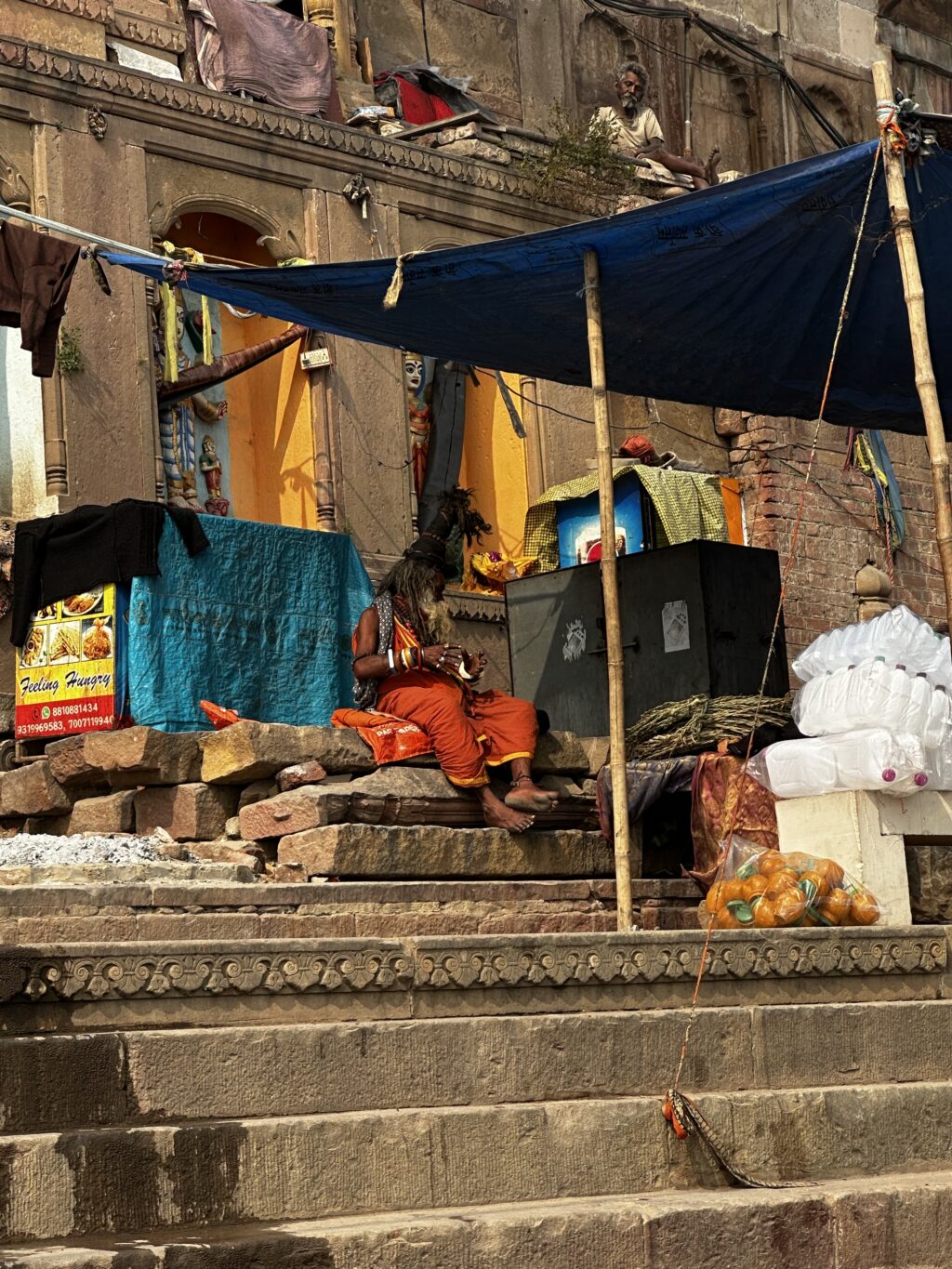
Some sadhus in India still use it, particularly those wandering and living outdoors, as in the Himalayas, who take it in order to improve their physical and mental energy and stamina and immunity, and tolerance of cold. It is used with discretion as part of their sadhana and ascetic practices, not for personal enjoyment. It is usually combined with various ascetic practices, rituals, mantras and invoking the Devatas, bringing in a spiritual dimension to its usage.
Yet few sadhus use it and we rarely find it used in ashrams. However, cannabis is not a psychedelic like LSD or Psilocybin, but it can improve the flow in the circulatory, respiratory and nervous systems. This requires special ways of preparing cannabis such as sadhus do carefully, not allowing the cannabis resins to increase too much, enter into the nervous system and bodily tissues or cause dehydration. Yet it is most commonly smoked.
Ayurveda does not have an extensive usage of psychedelics, though it has explored every type of medicinal plant. It would judge such mind-altering medications at an individual level, with special preparations and safeguards. We would rarely find these in Ayurvedic pharmacies or herbariums, but there is a growing interest in them.
Ayurveda recognizes the place of mind-altering herbs and formulas but this includes those of a more calmative nature. It relies on milder Medhya Rasayanas, or rejuvenative agents for the brain and nervous system, which improve psychological immunity and help; with pranayama, mantra and meditation practices. These include ashwagandha, brahmi, manduka parni, acorus calamus, shilajit, shankha pushpi, and herbs widely used in Ayurveda today as tonics and rejuvenative agents. These act to nourish the brain and nerves, calm and steady the mind.
Celia Roberts BSc: I was hoping to also gather your historical commentary on the medicinal use of cannabis in Ayurveda. Your insights would provide a valuable perspective, bridging traditional wisdom with modern research, and significantly enhance our understanding of this topic.
Dr David Frawley: Note my extensive book, Soma in Yoga and Ayurveda, in which I discuss Vedic and Ayurvedic Somas among related factors and my fifty years of studying the Vedas in the original Sanskrit. Yet it addresses Soma as the nectar that flows from the Sahasrar or Thousand Petal Lotus of the head, an internal secretion, not just an herb, though Ayurveda does mention a number of botanical Somas, the identity of many of which remains uncertain, as this Vedic information is many thousands of years old. Link
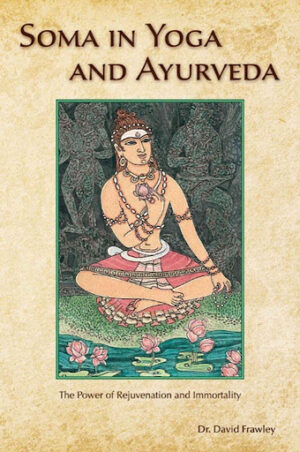
Soma is identified with a number of herbs and Ayurveda recognizes dozens of types of Somas as special herbs growing in the Himalayas and other mountain ranges, named after the meters (chhandas) in which Vedic mantric hymns are composed, more mental Somas we could say. Yet Soma is also a metaphor for Samadhi and the flow of bliss or Ananda in states of inspiration and higher consciousness, even art and music. I have seen no indications in the Vedic texts that the Soma plant was a mushroom as some have speculated. Soma is also said to be the healing essence of all the plants, even trees.
In Yoga and Tantra, there is an emphasis on such internal Somas, mainly accessed through opening the Sahasrara, the thousand petal lotus of the head, the result of deep and sustained Yoga Sadhana including special Pranayama, Mantra, and Meditation practices as part of Samadhi as the flow of Ananda, along with related practices and Devatas like Shiva and Tripura Sundari, and various Tantric practices including Sri Vidya.
The Soma Amrit or nectar is connected to the brain and crown chakra (Sahasrara). Its flow and descent from the Sahasrara complements the arising of the Kundalini Shakti or the Agni in the Muladhar or root chakra. This rising of the Kundalini fire and descent of the watery Soma Nectar is an essential part of awakening of higher awareness the opening of the chakras and nadis, with Agni as the Consciousness or Chit, and Soma as the bliss or Ananda. Soma fuels the Kundalini fire in its upward ascent.
Soma is part of a cosmic symbolism in the Vedas, not just a particular plant: for every form of Agni there is a corresponding form of Soma like the Sun and the Moon. The Rudram Chant to Shiva in the Krishna Yajur Veda speaks of Shiva and the AgniSomatmakam Jagat, the universe com;posed of the interplay of Agni and Soma, which are also the two aspects of Shiva who as Rudra is Agni in his fierce form and Soma as Shankara in his benefic form.
The Yoga Sutras state that Samadhi can be gained by the use of certain herbs, but also that these can be limited or transient in their effects.
The Rigveda Soma Mandala (Book 9), which is often regarded as one of the most important parts of the texts focuses on the inner Soma or nectar as a flow of bliss arising from deep meditation and mantra practices like Samadhi. Soma is also Ananda, as Agni is Chit (Consciousness). Soma is connected to the Moon, the Mind, and the Sahasrar. Vedic Soma are said to grow in mountain lakes like Manasarovar near Mount Kailas in Tibet which are also symbolic of the mountain lake of meditation. Somas are named after different types of Vedic meters (chhandas) or mantric Somas. In this regard Vedic hymns and mantras are said to induce the flow of Soma within us.
Celia Roberts BSc: I have heard that Somas can open the top chakras. Is it appropriate to use botanical Somas to enter into Samadhi at an introductory or secondary level of practice?
Dr David Frawley: Botanical Somas and Medhya Rasayanas can be helpful for concentration and Samadhi as psychedelics like Psilocybin have been used, but need the right application guided by gurus or elders. Soma is identified with the Sahasrar or thousand petal lotus of the head, which is also called Soma, which also means the Moon. From the Sahasrara the amrit or nectar of immortality, aiding in health and longevity, as well as higher consciousness. It is not just that Soma related herbs can open the Sahasrar or lotus of the head, but can be of some help if used correctly. That head chakra is called the realm of Soma and when it opens the Soma flows throughout all the nadis or channels of the subtle body. Soma is also connected to the third eye and to the soft palate of the mouth, as well as to the throat chakra.
Traditional use of psychedelics by shamanic and native traditions has had its place worldwide for millennia and is gaining a new recognition today, as these shamanic traditions are being better understood. Shamanism, Tantra and Yoga have much in common as they pursue nature’s intelligence and universal consciousness in ancient traditions.
Celia Roberts BSc: In some Peruvian lineages, the Shaman takes the medicine to facilitate healing for others and to understand where healing is needed in the body-mind. Is this consistent with traditional Ayurveda practices? In Ayurveda and most traditional natural healing systems, the doctor must learn to communicate with the plants used for healing, including for the mind and rejuvenation, and follow the plant’s prana and wisdom. Plants are conscious beings and have their own intelligence as part of nature’s intelligence that can guide us to a deeper level of healing, but must be used in a sacred and respectful manner.
Dr David Frawley: Traditional use of psychedelics by Shamanic and native traditions have been attributed with altered states of consciousness giving subtle insights. They usually require extensive initiatory practices relative to traditional teachings, community or family traditions that include special chants, dances, music, fasting, special festivals or rituals or taken at special sacred sites in nature or on special sacred days, and as connected to the deities they worship and elders that they follow and honor.
Celia Roberts BSc: I often return to this post: Ramana Maharshi on Ganja. I find Ramana Maharshi’s perspective on Ganja and certain drugs more liberal than expected. Various comments on the use of Ganja and Soma in yoga are highlighted throughout the literature.
From “Sri Ramana Reminiscences,” Sri Ramanasramam Publication; by G. V. Subbaramayya, Pg 36 (summer of 1939):
“Sri Bhagavan spoke about the use of drugs for practicing Yoga. He said, ‘I do admit that drugs have some beneficial effect. A certain drug can make the whole body melt and flow like the Milky Ocean. One Pattabhi told me that when he was given Chloroform before an operation he experienced a nectarous bliss and longed for that state again. The Chinese look like skeletons, but when they take opium, they feel like giants and do any difficult work.
These drugs must however be taken limitedly and secretly. Otherwise, all will demand them. Moreover, after some time the drug-habit will become a great force and obstacle from jnana (knowledge). Its addicts will not flinch from any crime to satisfy their craving (much like the use of opiates). So it is best to remain desireless. Having seen the effects of all these drugs, I have decided that to BE as we are is best. To strive for knowing one’s Swarupa (Real Self) through Self-enquiry, though it may be a little difficult, is only the safe path.’”
Dr David Frawley: I have been associated with the Ramanashram for years and written on the Maharshi’s teachings, as well as those of Kavyakanatha Ganapati Muni, his chief disciple, an expert in Ayurveda and Mantra/Tantra and Vedic Sadhanas, though he has not specifically addressed the taking cannabis that I have seen.
Botanical Somas should be aligned with Pranayama based Somas, Mantra based Somas and meditation based Somas, and part of Bhakti Yoga and Jnana Yoga, particularly to Shiva. Opium is a powerful pain reliever, widely used in Asia, but has addictive properties as the pharmaceutical opiates also show and are another topic. It has been used for pain relief in Ayurveda, though its usage has declined.
Celia Roberts BSc: Can you explain the use of Ganja in Ayurveda? The following again comes from the Ramana Maharshi Ashram:
As an aside, here is an anecdote suggesting that the beneficial qualities in Ganja may arise only after careful processing. This is a paraphrase, not a direct quote from Bhagavan.
From Mountain Path, 1972:
“Much depended on the way the drug was prepared. The leaves had to be fried in an earthen pot over a mild fire, washed in running water like a stream or waterfall for two days, soaked in lemon juice and boiling milk, and then combined with other ingredients to form the proper preparation. (Even qualified Ayurvedic practitioners often did not follow these rigorous procedures or were unaware of them.)”
Dr David Frawley: Yes, such herbs for the nervous system were specially prepared with special types of heat or fire, water (like that of the Ganga or cow’s milk) and various other substances like ghee. They were taken only in special circumstances and intentions, which required preliminary purification of body, prana, senses and mind and alignment with the forces of nature and time. They were prepared in special ways as mentioned relative to the Ramashram. They also may need to be combined with other supportive herbs, for example: Ganja with ghee like Brahmi ghee, Ashwagandha, Amalaki, Shilajit, and various Rasayanas (Rasayana is a Soma therapy). These were also considered botanical Somas, which did not simply refer to psychedelics.
Sadhus like Naga Babas who live outdoors, for example in the Himalayas, exposed to the elements and the seasons take cannabis to help adjust to living outdoors in nature, some living naked or their bodies covered only with the sacred ash (bhasma). For such sadhus cannabis may be used —but it is specially prepared, regulated and combined with specific sadhanas, mantras, or pujas. For them cannabis can support lung and bone health, and relieve pain like arthritis, but care is taken not to inhale its smoke too hot or use it too often or without any special consecration to the deity like Shiva.(cannabis is also not taken with alcohol).
Celia Roberts BSc: What about the path of purification in yoga? These verbal teachings by Meher Baba on the use of drugs in spiritual practice serve as a timely reminder of purification and abstinence as a chosen path. Yes, a very important counterpoint.
Meher Baba’s Teachings on Hallucinogenic Drugs
In the mid-1960s, the use of hallucinogenic drugs like LSD became widespread among the Western youth, without any purification or preparation, leading to overdoses and side effects, as many of the youth were emotionally disturbed and looking for various types of highs to pursue and doing what was forbidden.
Meher Baba expressed a grave concern. He issued a series of messages explaining the dangers of these substances and the need for their regulation. He stated that the experiences induced by hallucinogens are illusions within illusions and are far removed from real spiritual experiences. Continual use of such drugs could cause physical, mental, and spiritual damage, even leading some to suicide. Meher Spiritual Center
Yes hallucinogens can unleash the subconscious mind, including fears, desires, ambitions and egoism, which can overwhelm the ordinary mind.
In a message titled “God in a Pill?” published in 1966, Meher Baba further clarified his stance:
“If God can be found in a pill, then God is not worthy of being God. The experiences which drugs induce are as far removed from reality as is a mirage from water. No matter how much you pursue the mirage, you will never quench your thirst.”
Additionally, in a message from 1966, Meher Baba stated:
“All so-called spiritual experiences generated by taking mind-changing drugs such as LSD, mescaline, and psilocybin are superficial and add enormously to one’s addiction to the deceptions of illusion, which is but the shadow of reality.”
Facing questions from students like Allan Cohen, Baba (via his secretary Adi) clarified in a 14 July 1966 message:
1. Meher Baba did say that the user of LSD could never reach subtle conscious-ness’ in this incarnation despite its repeated use, unless the person surrendered to a Perfect Master. To experience real, spiritual consciousness, surrender-ance to a Perfect Master is necessary.
2. The experiences gained through LSD are, in some cases, experiences of the shadows of the subtle plane in the gross world. These experiences have nothing at all to do with spiritual advancement.
3. Beloved Baba stresses that repeated use of LSD leads to insanity, which may prove incurable in mental cases, even with LSD treatment
4. Medical use of LSD helps to cure, in some cases, mental disorders and madness.
5. There is no such thing as “areas in the brain reserved for subtle consciousness,” and the question of LSD affecting them has no meaning.
6. When LSD is used for genuine medical purposes, in controlled doses under the supervision of specialists, there are no chances of the brain, liver or kidneys being damaged.
7. Baba answered again that continued LSD use for non-medical purposes results in madness, and eventually death.”
It is interesting to note that Baba did not state that LSD should never be used. He clearly states that it can be used medically as a cure, “in some cases.” To help put Baba’s statements in context, consider how a physician uses a certain drug, versus how an individual may abuse the same drug. For example, we know that an emergency room doctor at a hospital will administer morphine, a powerful opiate, to a patient who is suffering great pain, so that a medical procedure may be performed to save the patient’s life. If morphine is taken by an individual for the painkilling effects without medical supervision, the result may lead to an overdose. In the same way, LSD can be used for rare medical conditions, but abuse of LSD can lead to madness or even death.
As Baba explained:
Medically there are legitimate uses of LSD. It can be used beneficially for chronic alcoholism, for severe and serious cases of depression and for relief in mental illnesses. Use of LSD other than for specific medical purposes is harmful physically, mentally and spiritually.
LSD and other psychedelic drugs should never be used except when prescribed by a professional medical practitioner in the case of serious mental disorder under his direct supervision.
Proper use of LSD under direct supervision of a medical practitioner could help to cure insanity. It could lead to insanity if used for purposes other than strictly medical.
Use of LSD produces hallucinations, and prolonged use of this drug will lead to mental derangement, which even the medical use of LSD would fail to cure.
In short, LSD can be used beneficially for specific medical purposes, but for spiritual progress it is not only useless but positively harmful.
In order to impress the reality of the dangers involved in drug abuse, specifically the use of LSD, Meher Baba had launched a campaign against ignorance.
By spreading his in-depth message against drug abuse he effectively revealed what is at stake for the individual drug user’s body, mind and spirit, as well as the fine points of the spiritual path to enlightenment.
Source: A MIRAGE WILL NEVER QUENCH YOUR THIRST
A source of wisdom about drugs
Dr David Frawley: These are very important insights of Meher Baba. I grew up during the sixties and taking psychedelics was often mixed with other drugs like methedrine (speed), alcohol, various types of intoxication, loud music etc. including by those who were immature or emotionally disturbed. Overdoses occurred and loss of emotional control or disturbances in the nervous system. Such reckless taking of psychedelics can be very dangerous for physical health, behavior and mental stability, particularly for those who are young or in distress.
Psychedelics can create artificial Samadhis in people without first purifying the mind and nervous system, making people vulnerable to various astral entities and even harmful asuric forces. Compare how LSD has been used in the West for personal enjoyment compared to how native people use their sacred herbs as doorways to nature’s intelligence and the wisdom of plants, and for maintaining their sacred traditions and practices.
Psychologists and Psychiatrists should first guide the patient to mental calm, attention and self-awareness, before prescribing psychedelics and do so with discretion and careful monitoring of the patient and low dosages to begin with. Yogic Yamas and Niyamas and Ayurvedic dosha regulating life-styles aid in this.
We recommend Medhya Rasayanas, such as Ashwagandha and Brahmi as already noted, relative to sadhana as they strengthen the mind and brain and prompt both concentration and longevity.
Noted archaeologist Graham Hancock, has addressed written extensively on psychedelics in native traditions and explained these in detail in his books and television programs, including their benefits and secret wisdom they can bring, special sages or guides who teach them and traditions that have done so for thousands of years as part of their life and culture in harmony with nature. We cannot compare such native traditions and their sacred plants, which were part of their environment and way of life, with the pursuit of drug based highs or just medical therapies. They came from a very different way of life and sense of our inner being, with such practices part of their culture and families.
You can reach states of Samadhi with various yogic practices as it is their goal, but the body, prana, senses and mind must be purified. There are Samadhis born of Bhakti Yoga or devotion which use mantra, chanting and devotional practices. Direct meditation with a silent mind is another way, like Self-inquiry as taught by Ramana Maharshi. Pranayama along with mantra has many Samadhi promoting practices such as part of Kriya Yoga and Tantra.