

The Unmoving Seat
Notice the one who remains still while everything else moves.
You have never moved.
When you sit in a train, a car, or an airplane, scenery shifts, tracks click away, and continents pass below. Yet inside the cabin, you sit quietly. Relative to your direct experience, you haven’t moved at all.
Sri Ramana Maharshi pointed directly to this truth: while we assume we travel from one location to another, only the physical body shifts. Who you truly are remains untouched. You are not this body. The Self is unmoving; the world moves within you.
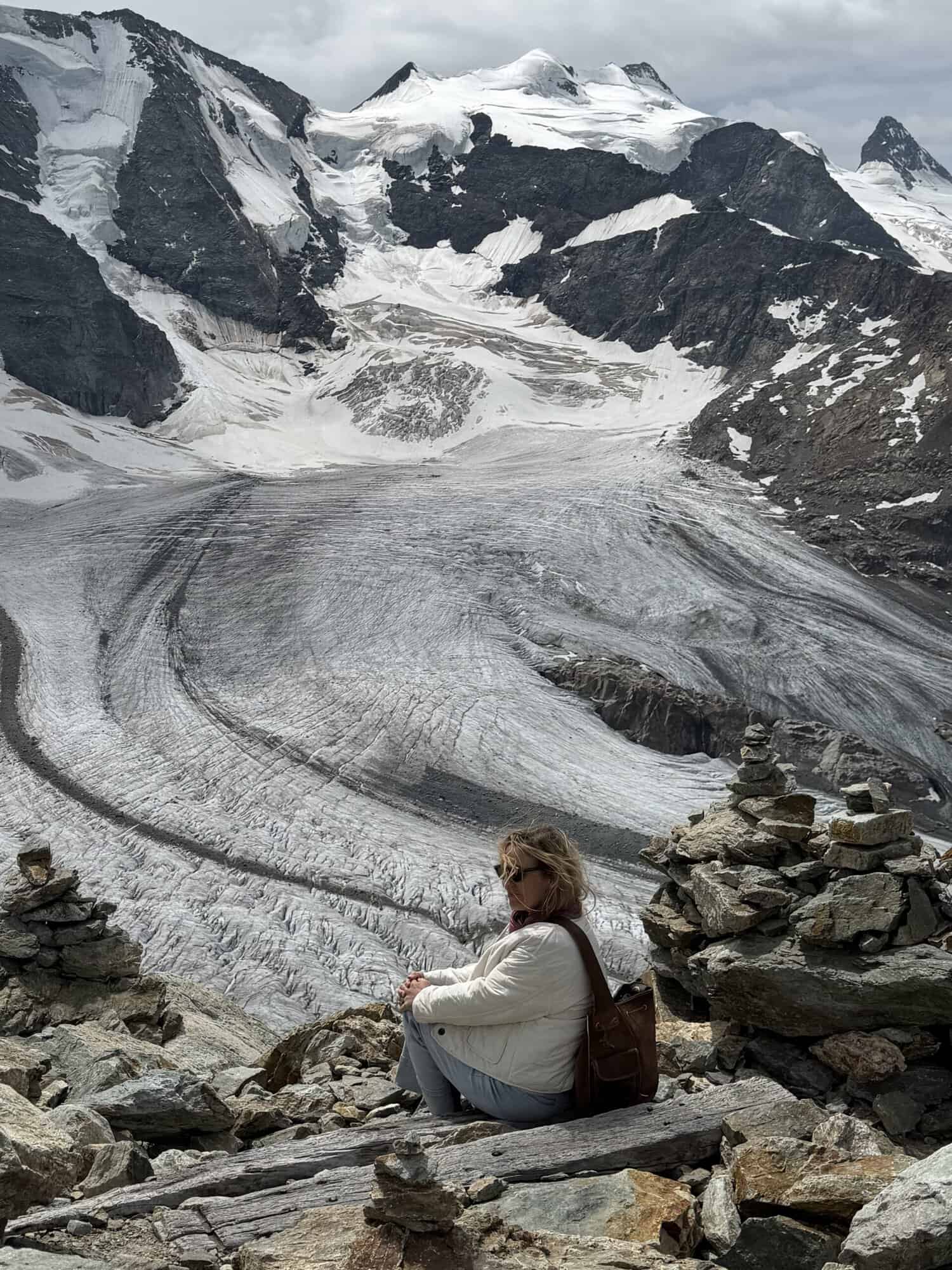
In Process-Oriented Psychology, Jungian analyst Arnold Mindell used a floating glacier to illustrate this structure of consciousness. The visible tip above the waterline represents our daily identity—our stories, mental chatter, and ego. Beneath lies an immense, quiet mass holding the ocean depths: the vast Self.
We spend entire lives managing the small tip of the iceberg above the waves, forgetting the immense depth supporting us from below. When surface chop tosses the tip around, the vast body of conscious awareness beneath stays completely steady.
Deep down, you are grounded in something that cannot be shaken. Rest back into that unmoving depth, and let the surface waves simply drift.

Getty Image
We easily fall into continuous effort, trying to fix ourselves, reach higher states, or heal every edge. As Ramana reminds us, that constant desire to repair who we are is simply the ego attempting to become the Self. Timed meditation serves as a tool for beginners settling a restless mind, but the deeper practice is far gentler: drop the effort and rest as you are. To be is pure awareness, and being is enough.
Yoga is not a wellness routine or self-help exercise; it is the science of Self-realisation. In the same way, Advaita Vedanta (non-duality) offers direct realisation of Brahman, the absolute reality.
Because non-dual practices dismantle bodily identity, they demand respect. Recent reporting from the ABC’s All in the Mind podcast highlights adverse effects when meditation is treated as a quick fix.
I encourage you to listen to Part One and Part Two of the ABC series, as I strongly agree with their warnings. Just like an antidepressant, meditation carries potent effects and is not intended for every mind. Historically, yoga was never prescribed to those who were mentally or physically unwell, and meditation was not viewed as therapy.
When non-dual inquiry strips away your familiar identity, it can feel disorienting or overwhelming if you are not psychologically grounded. In these moments, recognising your true nature acts as a safety net rather than an exercise in dissolution.
In the Vedantic tradition, genuine safety lies in understanding the true nature of the Self: Turiya, the fourth state of consciousness. Turiya is the quiet, background awareness that remains constant throughout waking, dreaming, and deep sleep. When you realise your core nature is this deep, unshakeable peace, nothing appearing on the screen of consciousness can harm you: emptiness cannot harm emptiness.
You have never moved. You are the Self, and the body exists within you.
Warm wishes,
Celia Roberts
Teachings inspired by Ramana Maharshi