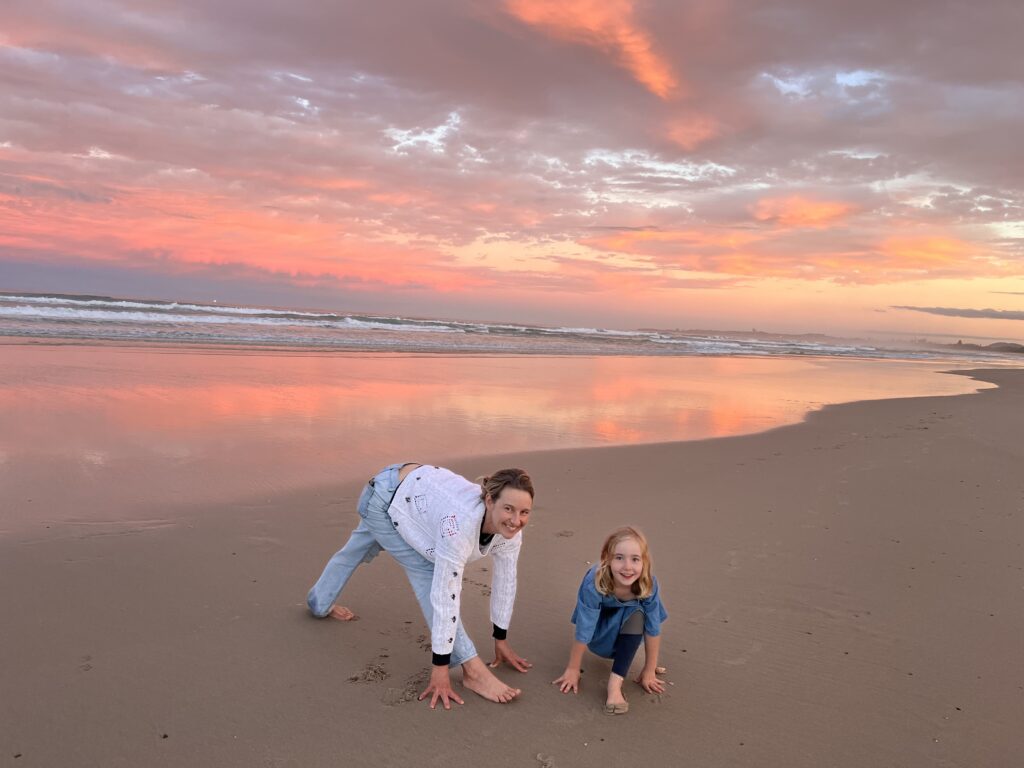
Parsvottanasana

Intense side stretch pose. The meaning of Parsva is side or flank. Uttana means intense stretching. This posture is defined as a posture that intensely stretches one side of the body.

How to perform Parsvottanasana

1. Stand in the pose of Tadasana. Exhale and lightly jump to stand at a distance of 1m-1.5m feet apart. Keep your hands on your hips. Rotate your left foot to the right at 45 to 60 degrees and your right foot to the right at 90 degrees. Align both your heels with each other. Make your thighs firm and rotate your right thigh outward to bring the centre of the right knee cap in line with the centre of the right ankle.

2. As you exhale, twist your body to the right, bringing the front of your pelvis as close to the front edge of the yoga mat as possible. As your left hip pivots forward, push the head of your left hip back to lock your heel on the ground. Press your outer thighs inward as if you were squeezing a block between them. Press the shoulder blade firmly against the back of the body, stretch the tailbone to the ground and slightly arch the back of the body.

3. During another exhalation, bend your upper body forward from the groins towards the right leg. Bring your torso parallel to the ground. Keep your fingertips on the floor on the left or right side of the right foot. If you find it difficult to touch the ground, keep your hands on a pair of blocks. You can also keep your hands on the chair seat. Push the thighs back, stretch the upper body forward, and lift through the top of the sternum.

4. The front-leg hip tends to pull upwards towards the shoulder in this pose and move to the side, thereby shortening the front-leg side. Make sure that you soften the front-leg hip toward the ground, aiming for external rotation of the front hip, keeping it away from the shoulder of the same side while squeezing the outer thighs. Press the big toe (base) and the inner side of the front foot’s heel firmly into the ground, then bring the inner groin of the front leg into the pelvis. Pressing the big toe base can reduce hyperextension of the back knee. Squeeze the legs gently together in this pose to create resistance, a bandha (ha-kati bandha) and longer term extensibility of the hamstring muscles.

5. For a few breaths, keep your body and head parallel to the floor. If your flexibility allows, pull the front of the body closer to the top of the thigh; do not move your waist forward to do this. Finally, your long front portion of the body will rest on your thighs. Stay in this position for 15-30 seconds, then return up while inhaling and pushing actively through the back heel and pressing the coccyx first down and then deep into the pelvis. Then move to the left side.
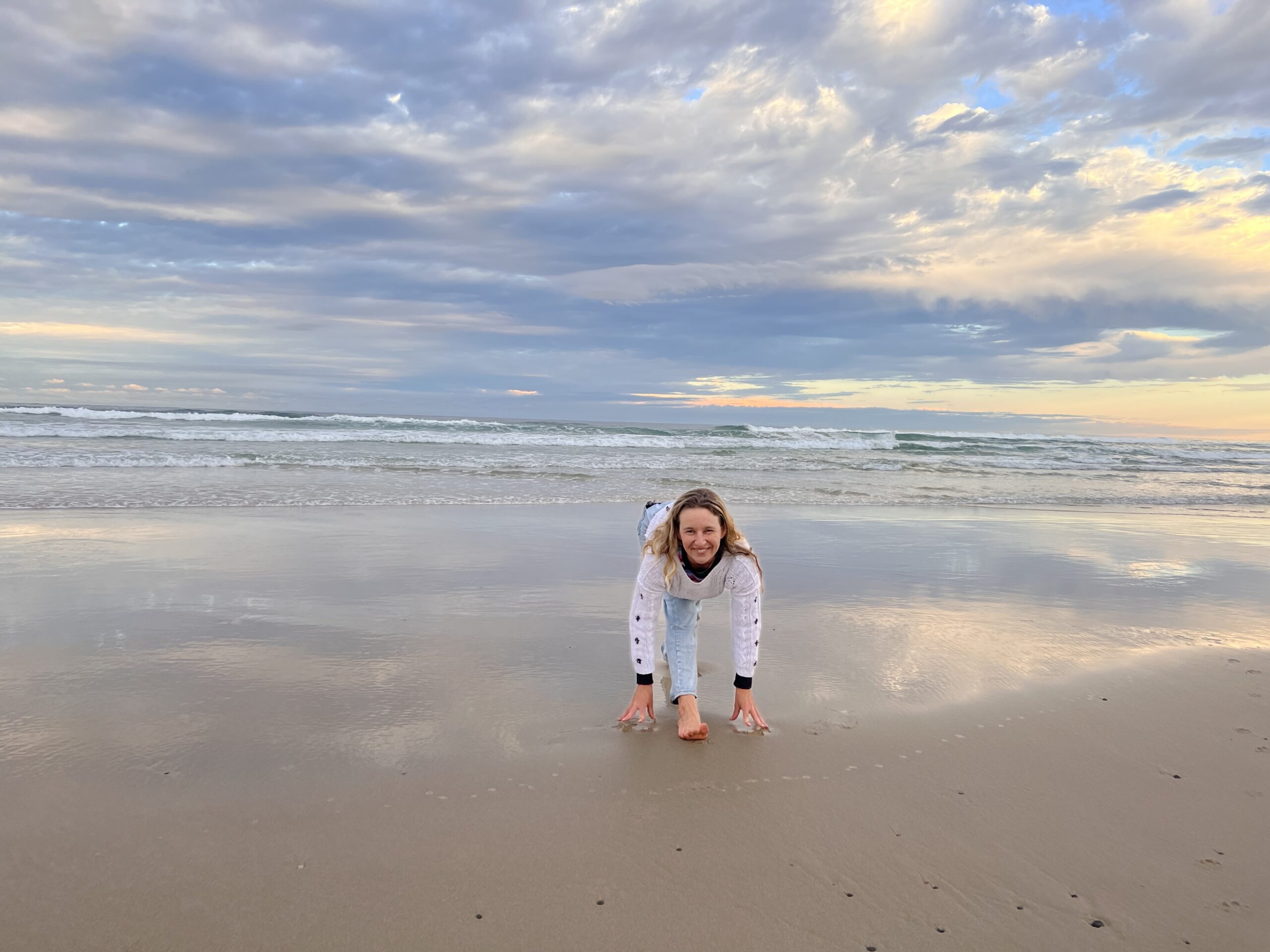
Parsvottanasana Benefits

Western Physiology

Parsvottanasana has a therapeutic effect on mental and physical health.

  • Parsvottanasana improves mental health:
    • It helps in calming and relaxing the brain.
  • Parsvottanasana stretches and strengthens the muscles:
    • It helps stretch the shoulders, hips, hamstrings, spine, and wrists in the full pose.
    • This pose, in tandem with others, makes the hamstring muscles more flexible (Grabara & Szopa, 2015).
    • The hands-on blocks variation of this pose strengthens the legs and knees (Colgrove et al., 2019).
  • Parsvottanasana benefits the spine:
    • This pose, in tandem with others, increases the mobility of spinal joints (Grabara & Szopa, 2015).
    • The hands-on blocks variation of this pose stretches the spine (Colgrove et al., 2019).
    • This pose, in tandem with others, improves the symptoms of chronic low back pain (Williams et al., 2019).
    • This pose benefits patients with “flat-back syndrome” and hyperlordosis (Wainapel et al., 2015).
  • Other therapeutic effects of Parsvottanasana include but are not limited to:
    • The hands-on blocks variation of this pose improves balance (Colgrove et al., 2019).
    • It helps in stimulating the organs situated in the abdominal region.
    • It helps in improving and promotes digestion.
    • It has therapeutic benefits for flat feet.
    • This pose, in tandem with others, increases cardiovascular endurance (Lau et al., 2015).

Yogic Physiology

The posture is excellent for working apana vayu and vyana vayu.
It is very good for reducing vata and pitta and calming the mind.
It will place pressure on basti (bladder) and nabhi (navel) marma points. It will massage lohitaksha marma points which sit directly on the lymph nodes in the hips, promoting flow.

Contradictions and Cautions

Individuals suffering from a back injury and high blood pressure should avoid the full forward bend; instead, they should do Ardha Parsvottanasana. Do steps 1 and 2 as mentioned above, standing a couple of feet away and facing a wall. Exhale and lower your upper body parallel to the ground and extend your arms towards the wall. Push your hands actively into the wall (extend your elbows fully), keeping the front of your upper body longer than the back of your body.

Preparatory Asanas

Follow up Asanas

Tips for Beginners

There is a middle position for the hands and forearms, between the hands on the floor and squeezing them together behind the back. You should just cross your arms behind your back, parallel to your waist. Use opposite hands to hold your elbows. When the right foot is in front, first bring the right hand behind the back; then, when the left foot is in front, bring the left hand first.

Variations

As mentioned above, the full version of this pose is performed with the hands behind the back in Anjali Mudra, a hand position sometimes called Pristanjali Mudra (prish-TOHN-jolly; prishta = “the back, the rear of anything”), or sometimes Paschima Namaskar (posh-EE-mah nam-AHS-car; pashima = “west”; namaskar = “to greet or salute”).

Stand in Tadasana pose with your hands in Anjali Mudra in front of your heart. Slightly bend your knees and round your back, hunching at the shoulders. Exhale, turn your hands inward and bring them behind your back. Press your palms together, placing your thumbs on your sacrum, so your fingers point toward the floor. Firstly, you should turn your wrists so that your fingers point towards your sacrum, then keep turning as long as your fingers point towards your head. Now your little fingers will be pressed against the back of the body. Move your hands up your back, lifting and opening your chest. If you can, place your hands between your shoulder blades so that your little fingers are pressed firmly against your spine. Spread your arms as far as possible. Rotate your front shoulders up and back and length from your back armpits through your elbows to the ground. Then follow the instructions for the posture.

Advanced practitioners may wish to hold a brick between their hands and behind their body. To place the brick between the hands in prayer pose, use a wall to help you place the brick.

Modifications and Props

In case you find that your back heel lifts up when you lean into this pose, do the asana with your back heel against the wall. The contact of your heel with the wall will anchor your heel to the ground. You can also raise your back heel on a sandbag to avoid lifting.

Deepen the Asana

This pose has two ways to position the torso over the front thigh. Beginners should align the torso’s midline over the front thigh’s inner side. Advanced students should turn the trunk and lower its midline over the midline of the front of the thigh.

References

Grabara M, Szopa J. Effects of hatha yoga exercises on spine flexibility in women over 50 years old. J Phys Ther Sci. 2015 Feb;27(2):361-5. doi: 10.1589/jpts.27.361.

Colgrove YM, Gravino-Dunn NS, Dinyer SC, Sis EA, Heier AC, Sharma NK. Physical and Physiological Effects of Yoga for an Underserved Population with Chronic Low Back Pain. Int J Yoga. 2019 Sep-Dec;12(3):252-264. doi: 10.4103/ijoy.IJOY_78_18.

Williams K, Abildso C, Steinberg L, Doyle E, Epstein B, Smith D, Hobbs G, Gross R, Kelley G, Cooper L. Evaluation of the effectiveness and efficacy of Iyengar yoga therapy on chronic low back pain. Spine (Phila Pa 1976). 2009 Sep 1;34(19):2066-76. doi: 10.1097/BRS.0b013e3181b315cc.

Wainapel SF, Rand S, Fishman LM, Halstead-Kenny J. Integrating complementary/alternative medicine into primary care: evaluating the evidence and appropriate implementation. Int J Gen Med. 2015 Dec 7;8:361-72. doi: 10.2147/IJGM.S66290.

Lau C, Yu R, Woo J. Effects of a 12-Week Hatha Yoga Intervention on Cardiorespiratory Endurance, Muscular Strength and Endurance, and Flexibility in Hong Kong Chinese Adults: A Controlled Clinical Trial. Evid Based Complement Alternat Med. 2015;2015:958727. doi: 10.1155/2015/958727.

If you would like to contact Celia to learn more about the meditation teacher training journey, please do visit our Meditation Teacher Training Page or find us on Facebook or Instagram or contact Celia directly.

Yoga Teacher Training Courses

World recognised courses that offer a paramount understanding of the connection between the Western Medical Model and the Ancient Science of Yoga: enriching programs that foster teachers of integrative lifestyle medicine, job ready for a future in allied health.
Learn more
Scroll to Top

Be Inspired To Practice

Join us regularly as we share an array of inspirational articles related to Mind-Body Medicine, Complimentary Yoga and Meditation Classes, Yoga and Meditation Teacher Training special offers, and share our Registered Continued Professional Development opportunities.

Simply enter your name and email in the form below.

  • This field is for validation purposes and should be left unchanged.